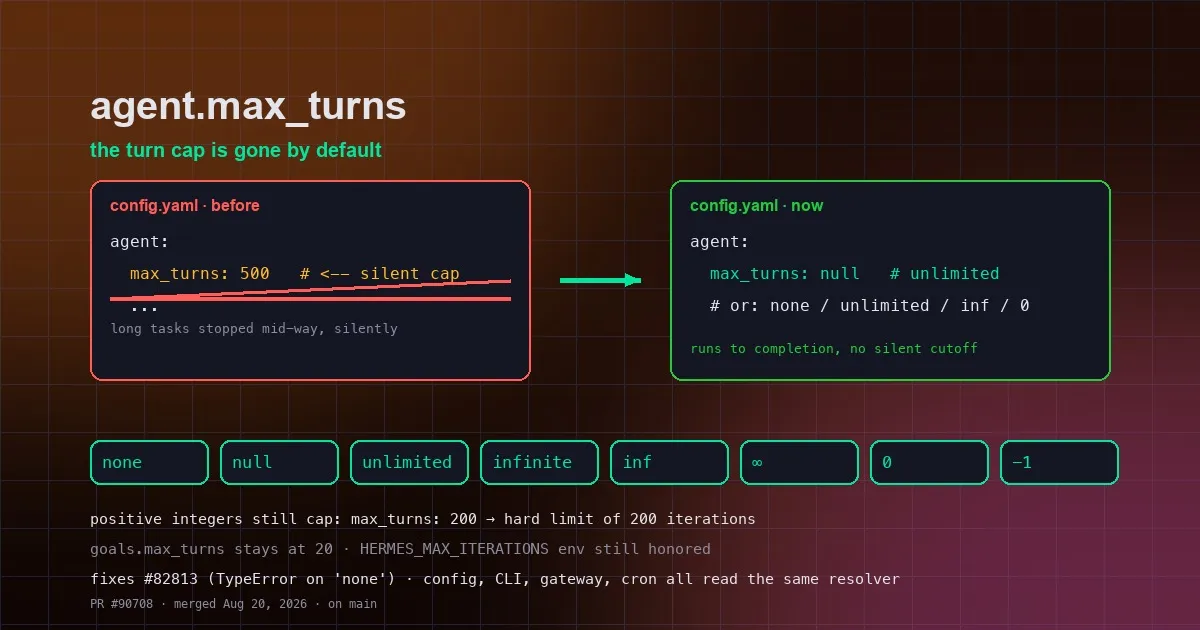
No More "Stops Halfway": Hermes max_turns Is Now Unlimited by Default
Hermes changed the per-turn tool-call cap from a default of 500 to unlimited: long tasks are no longer silently cut off. This post explains what max_turns is, how the new unlimited default works, how to set a limit when you want one, and how it differs from goals.max_turns.
Read more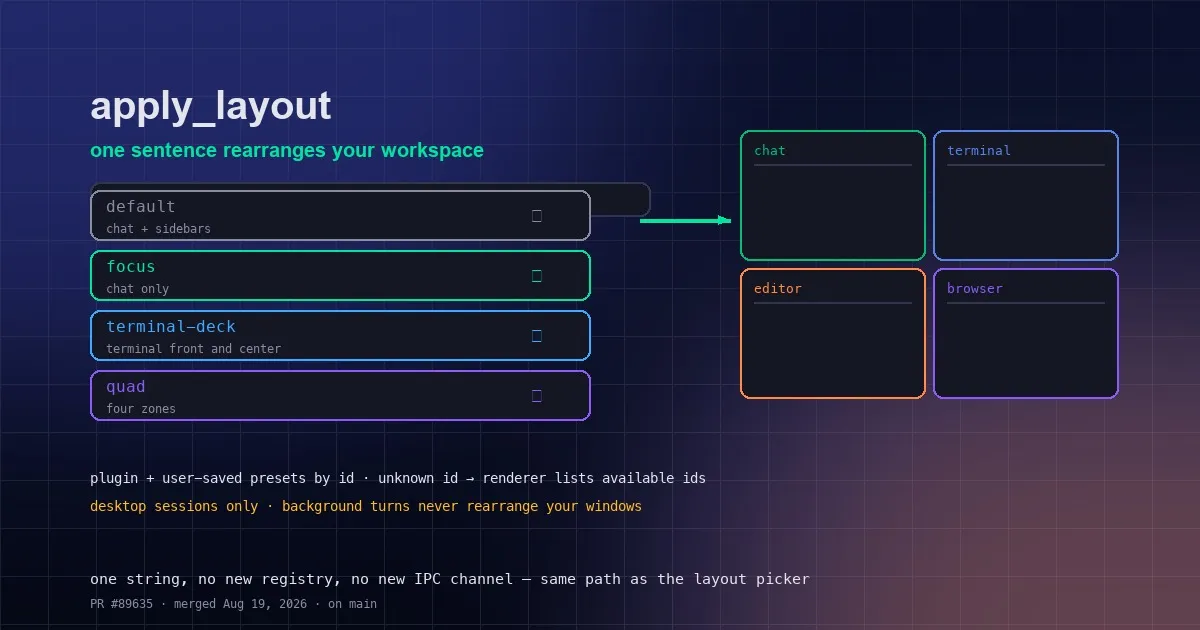
"Set Up My Layout for Coding": Hermes Can Now Arrange Your Desktop Workspace
Hermes Desktop gained an apply_layout tool: say 'give me a focused view' and the agent rearranges your windows to a saved preset — built-ins like default, focus, terminal-deck and quad, plus plugin and user-saved layouts.
Read more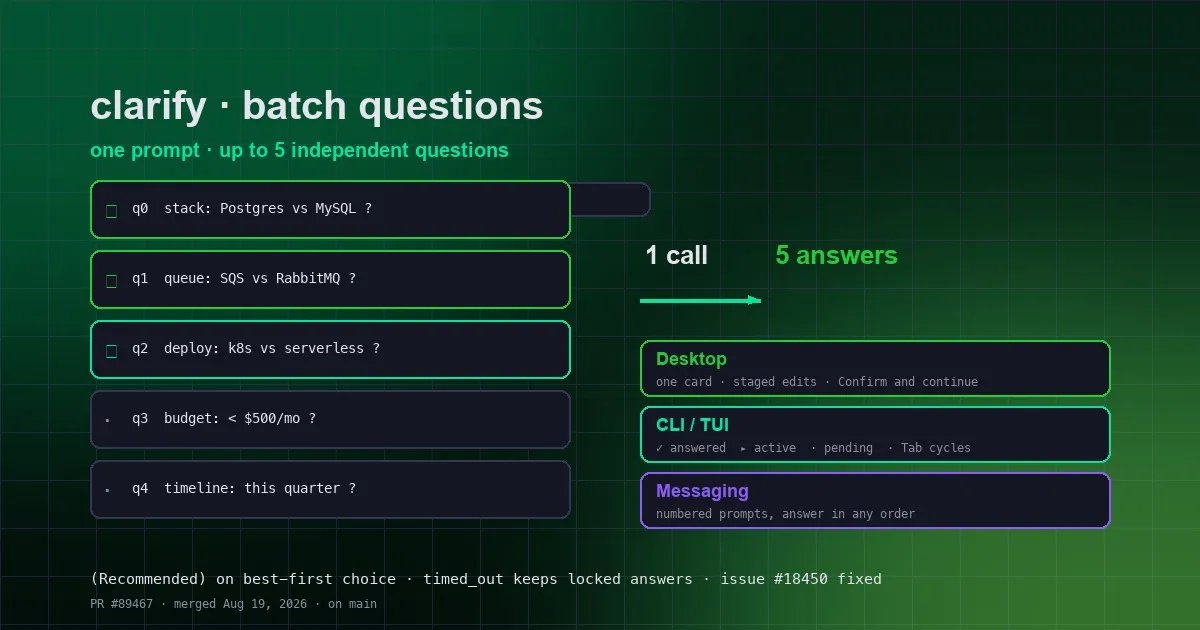
No More Question Ping-Pong: Hermes Now Asks Up to 5 Questions at Once
The clarify tool gained a batch questions parameter: the agent can pack 2–5 independent questions into one prompt — one card on desktop, one status list in the terminal, answered once, no more back-and-forth.
Read more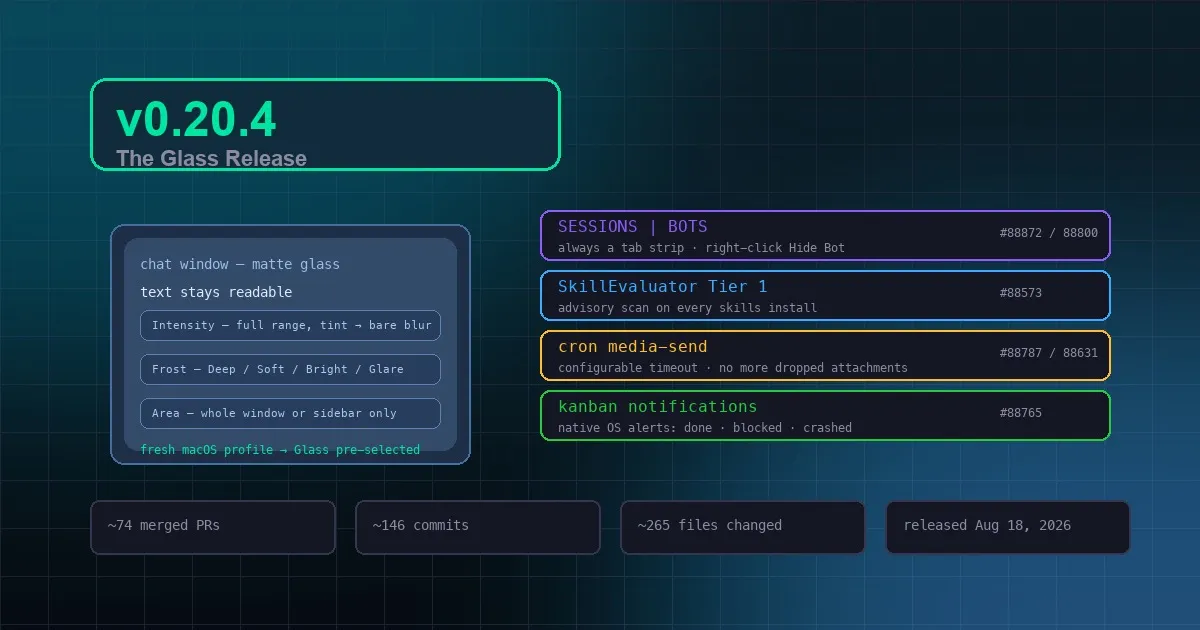
Hermes v0.20.4: The Glass Release — Translucent Windows, Honest Updates, Self-Checked Skill Installs
v0.20.4 is the release that finally finishes the desktop: a Glass translucency mode on macOS you can actually read through, a permanently tabbed SESSIONS|BOTS sidebar with hide/unhide bots, an honest hermes update, advisory NVIDIA SkillEvaluator scans on skill installs, cron attachments that stop vanishing, and native Kanban notifications.
Read more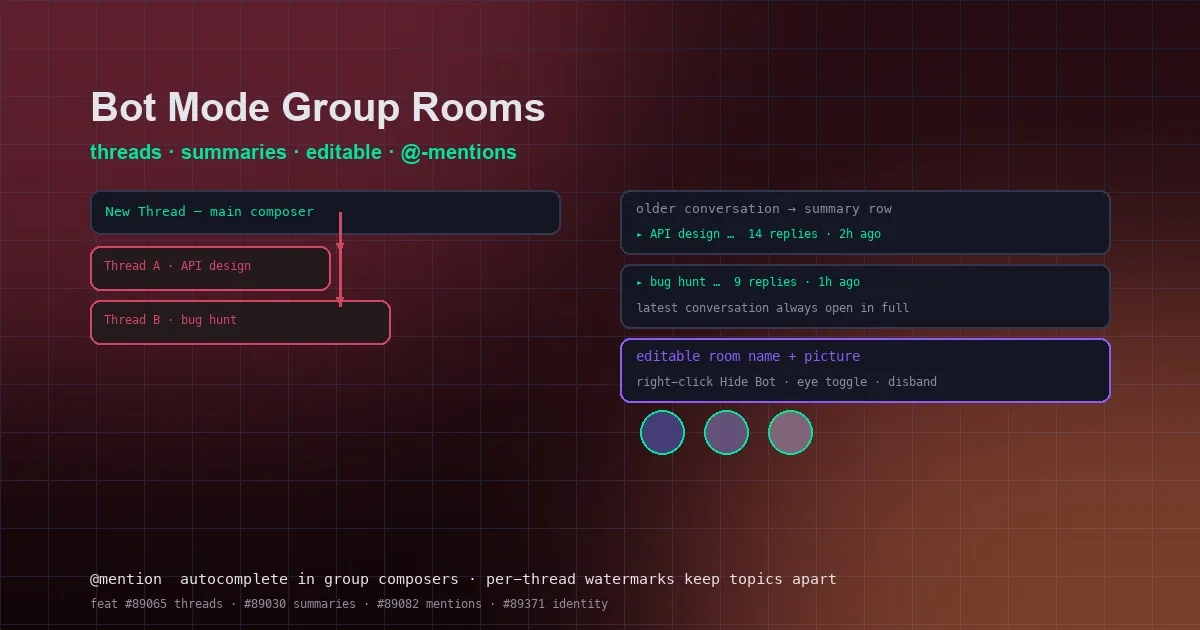
Bot Mode Group Chats Grow Up: Threads, Summaries, and Rooms You Can Actually Manage
Bot Mode group chats are evolving from one flat room log into a real collaboration space: the main composer starts a thread, reply-in-thread continues it, older conversations fold into one-line summaries, @-mentions autocomplete, and group names and room pictures are editable. Parallel agent tasks no longer bleed into each other.
Read more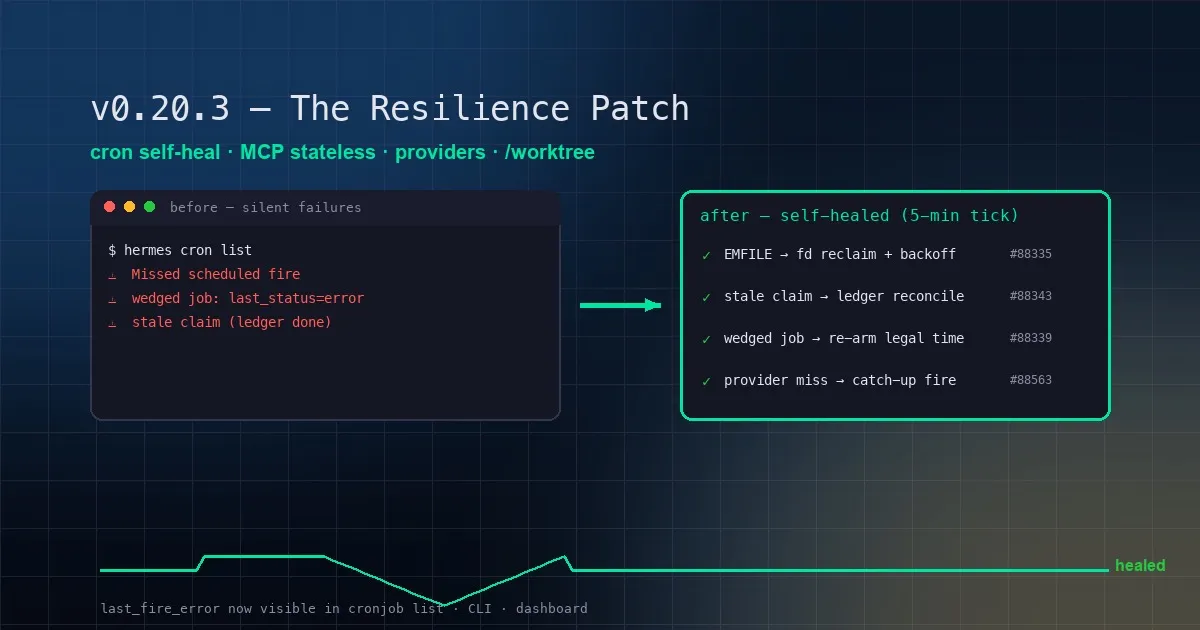
Hermes v0.20.3: The Resilience Patch — Cron Jobs That Heal Themselves
v0.20.3 is about ending silent failures: missed cron fires catch up and show up as last_fire_error, EMFILE self-heals, wedged jobs re-arm themselves, and the scheduler survives what used to kill it quietly. Also in the window: MCP 2026-07-28 stateless protocol support, CommandCode as a first-class provider, and /worktree + safe /rollback.
Read more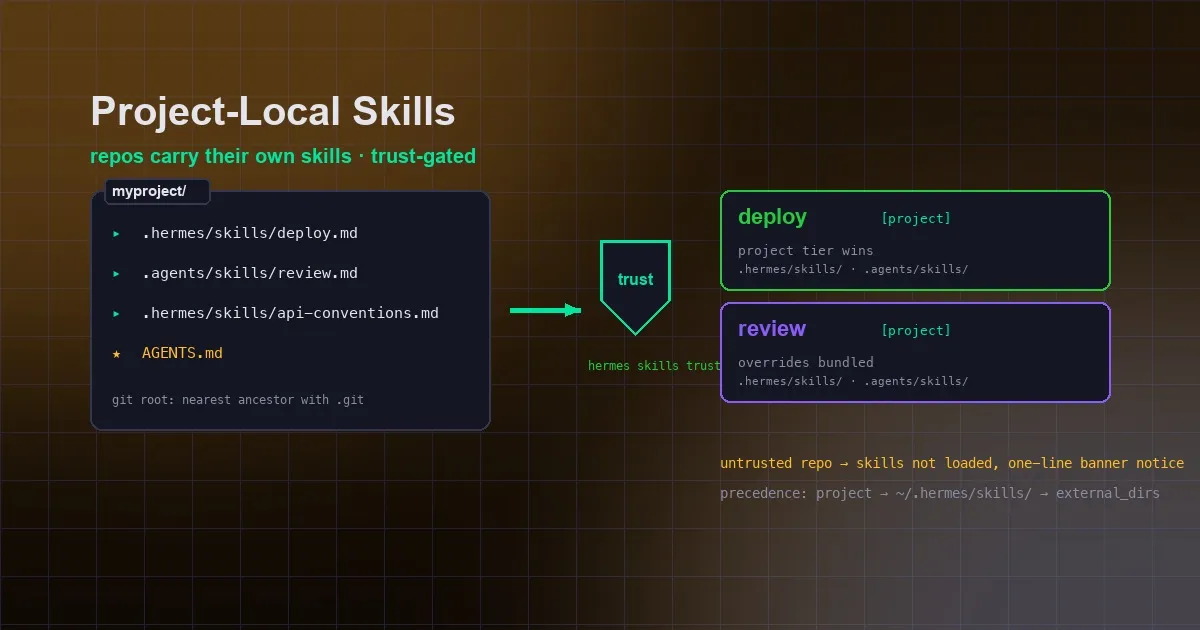
Put Skills in Your Repo: Project-Local Skills with a Trust Gate
Hermes adds project-local skills: drop a .hermes/skills/ or .agents/skills/ folder in your git repo and sessions started inside that checkout pick them up as the highest-precedence skill tier — but nothing loads until you run hermes skills trust. Same-named bundled skills get overridden on their home turf, and untrusted repos stay fully isolated.
Read more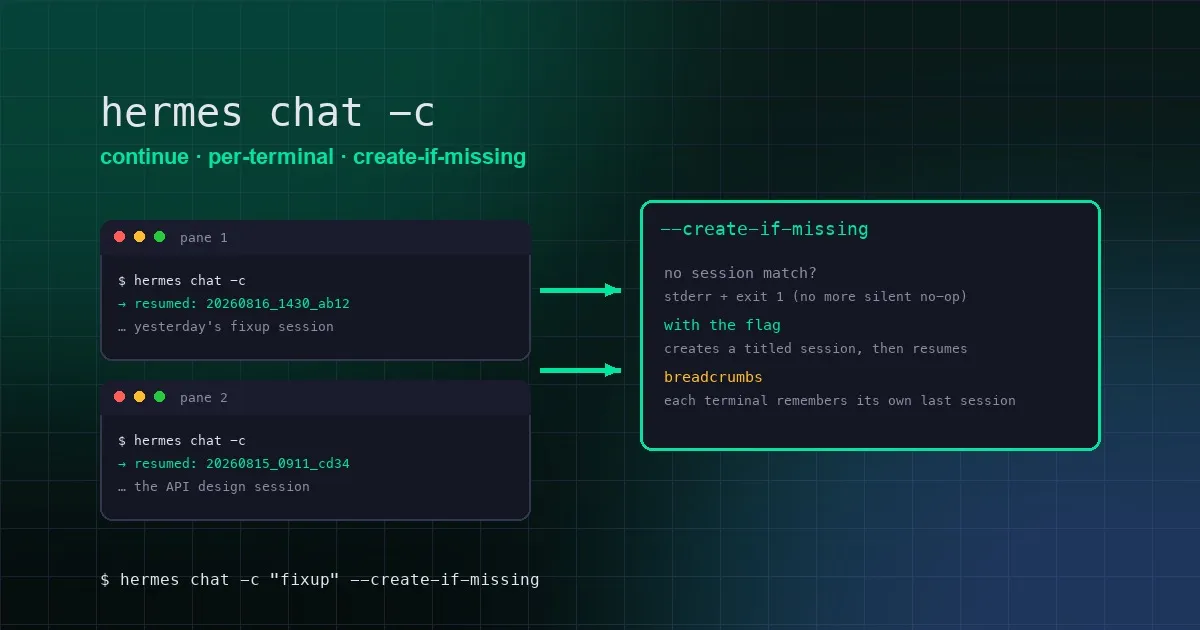
hermes chat -c: Continue Your Own Session per Terminal, or Create It on the Fly
Two tmux panes, two conversations, one command each — v0.20.2's terminal breadcrumbs make a bare `hermes chat -c` resume THIS terminal's own last session. Named lookups fail loudly on stderr now, and --create-if-missing spins up a fresh titled session when nothing matches.
Read more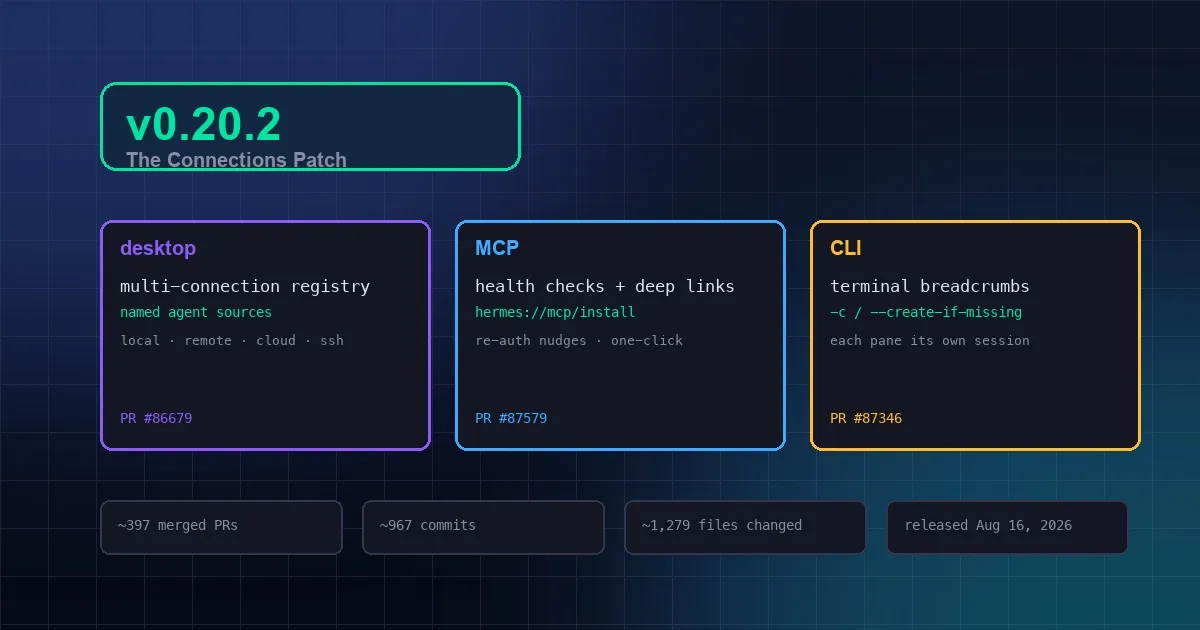
Hermes v0.20.2: The Connections Patch — Multi-Gateway Desktop, One-Click MCP Installs, and Per-Terminal Sessions
v0.20.2 merges ~397 PRs in three days. The desktop app gains a real multi-connection registry (local, remote gateways, Hermes Cloud, SSH hosts), MCP gets hermes:// one-click installs and background health checks, and terminal breadcrumbs let each pane continue its own session.
Read more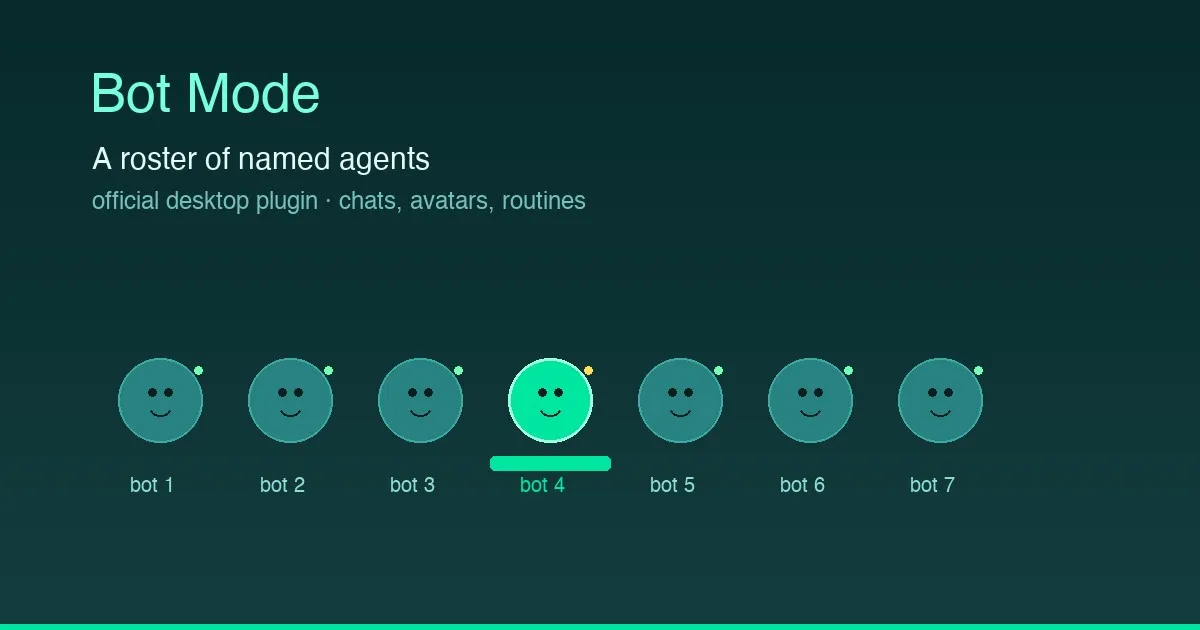
Hermes Bot Mode: Turn Your Profiles into a Roster of Named Bots — Official Desktop Plugin, Fully Explained
Nous Research's official desktop plugin (launched Aug 13, 503★) turns Hermes profiles into a roster of named bots — each with its own chat, avatar, personality, and schedule. Bots pane, instant New Agent, AI portraits, bot-to-bot messaging, @mentions, and the multi-source agents foundation.
Read more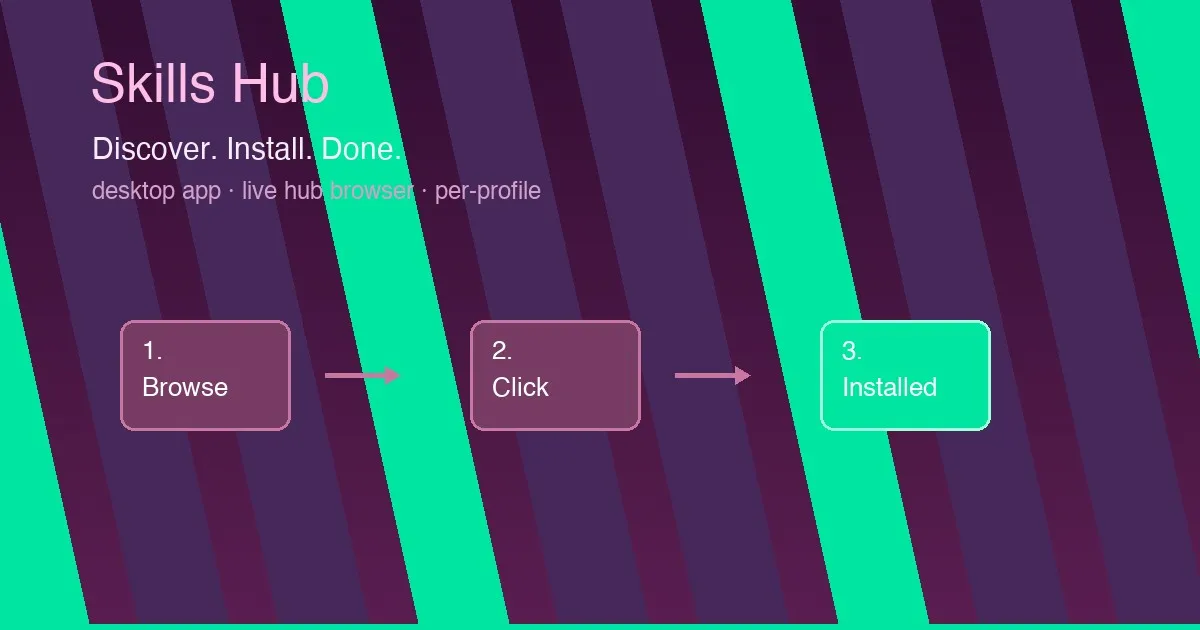
Hermes Desktop Skills Hub: Browse, One-Click Install, and Per-Profile Isolation — No More Memorizing Commands
The desktop Skills tab is now the single home for skill management AND discovery: an embedded live Skills Hub browser, one-click installs that refuse duplicates, a full-skill detail pane, and Capabilities-wide profile scoping. Merged to main on Aug 15–16, 2026.
Read more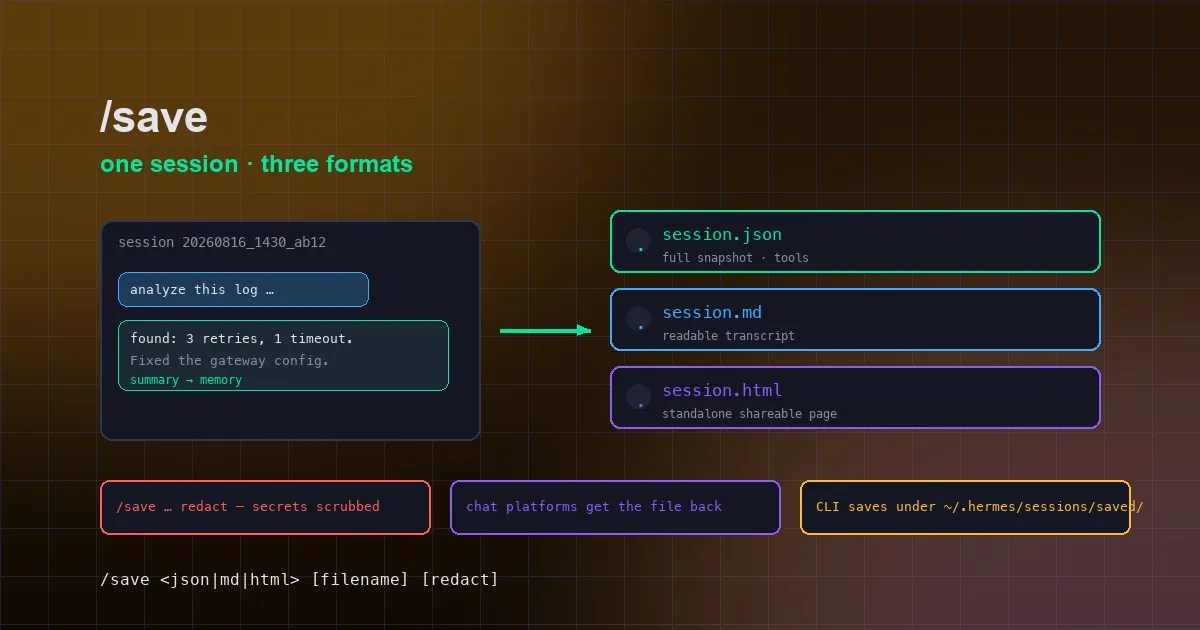
/save: export any session as JSON, Markdown, or HTML — even from chat
Spent three hours debugging with Hermes and want to keep the whole conversation? The /save command exports the current session as JSON, Markdown, or HTML, the redact flag scrubs secrets first, and chat platforms get the file delivered straight back to you.
Read more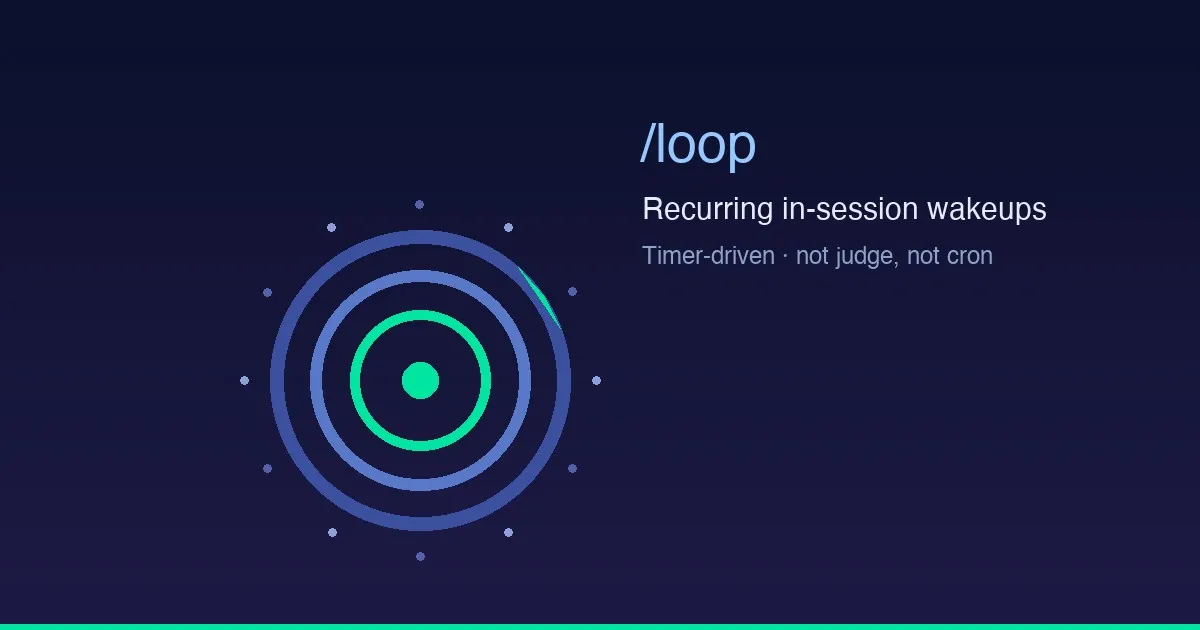
/loop: Hermes' Recurring In-Session Wakeups — Timer-Driven, Not Judge-Driven, Not Cron
/loop is Hermes' take on Claude Code's command: re-run a prompt on a fixed or self-paced cadence inside the live session, on every surface — CLI, TUI, desktop, and all messaging platforms. Architecturally distinct from judge-driven /goal and schedule-driven cron, with zero extra LLM cost.
Read more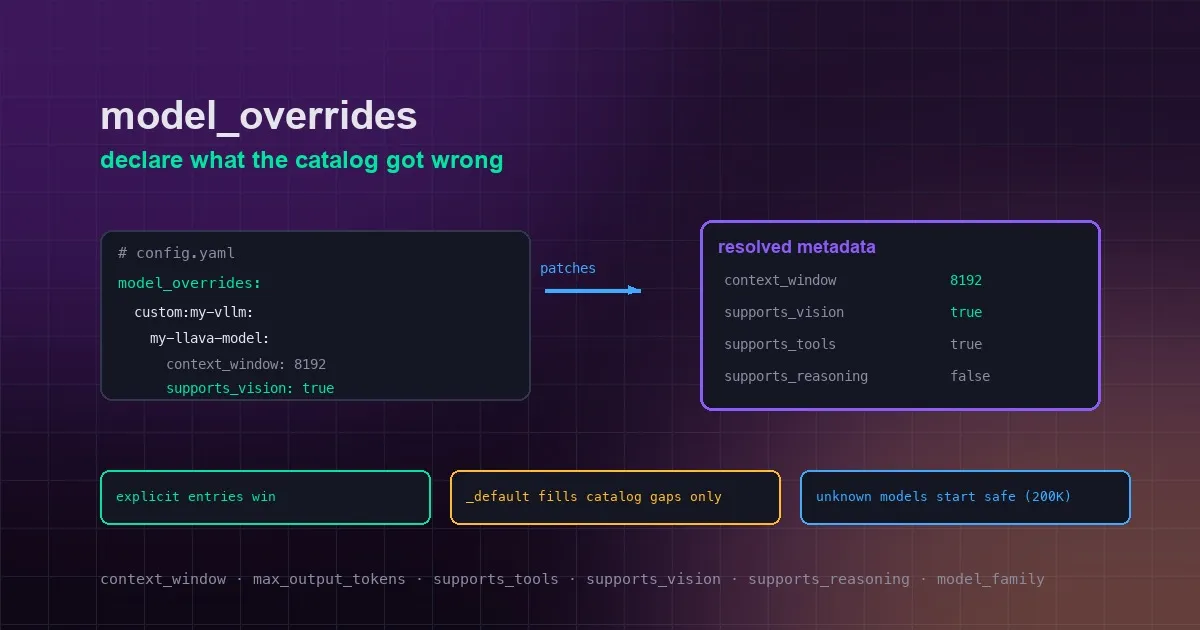
Hermes doesn't know your model? Declare context window and capabilities with model_overrides
When model-catalog data is wrong or missing, Hermes misjudges context windows and capabilities. The model_overrides config section lets you declare context_window, vision, tool support and more by hand — for local vLLM servers, brand-new models, and custom endpoints.
Read more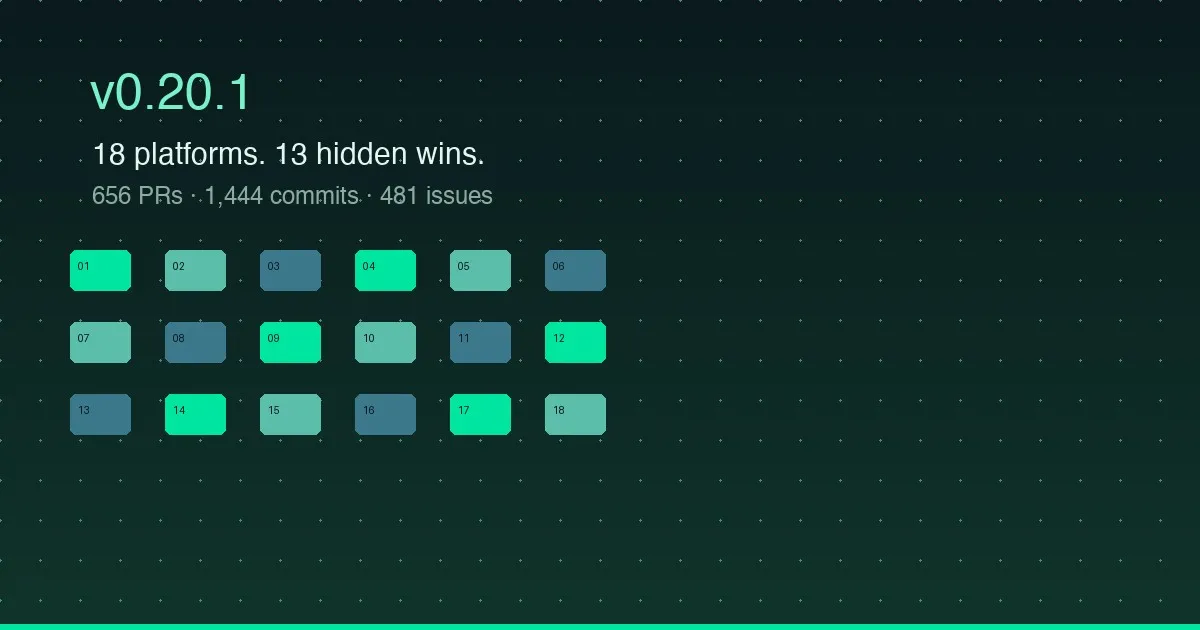
Hermes v0.20.1: 18 Platforms and 13 Hidden Efficiency Wins You Probably Missed
v0.20.1 quietly merged 656 PRs and 1,444 commits, but the official notes only say 'full docs ship with v0.21.0'. The 13 wins hiding in this patch: Windows setup stops hanging, Anthropic prompt caching comes back, session resume restores your model, state.db self-heals…
Read more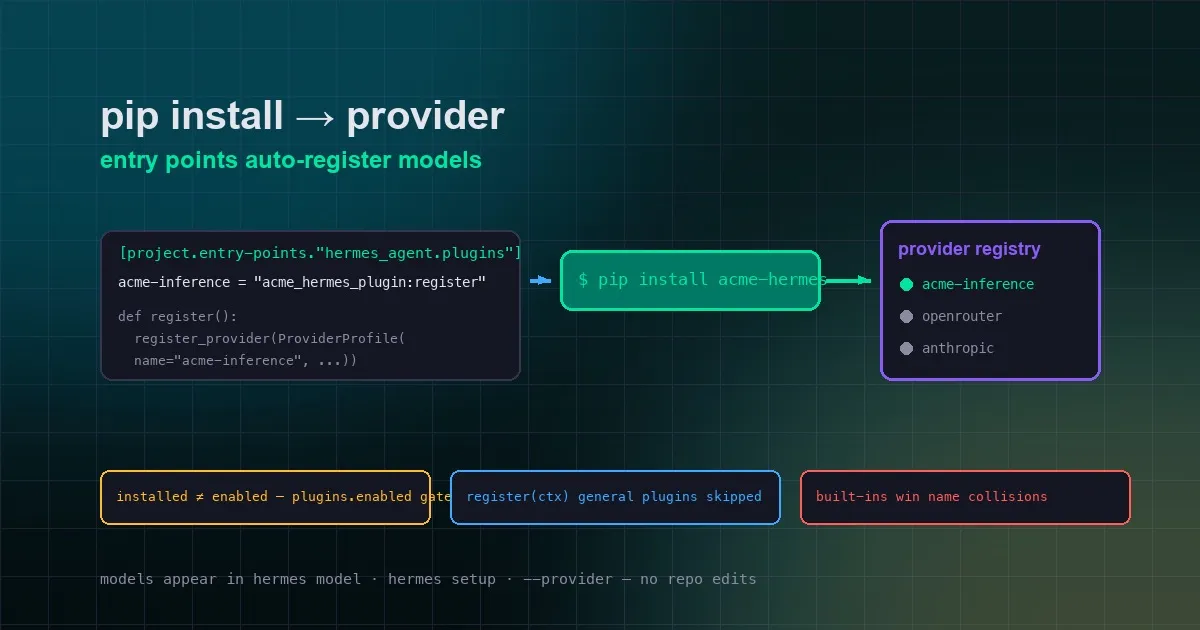
Package Your Own Model Provider for Hermes as a pip Plugin
Your team runs an internal inference gateway, and every new model means hand-editing Hermes' config.yaml — on every developer's machine. PR #85504 (merged August 13) makes model providers pip-installable: declare an entry point in pyproject.toml, and Hermes auto-discovers the provider at startup — its models show up in the registry like any built-in. This post covers the mechanism, the plugins.enabled opt-in gate, and the safety boundaries.
Read more