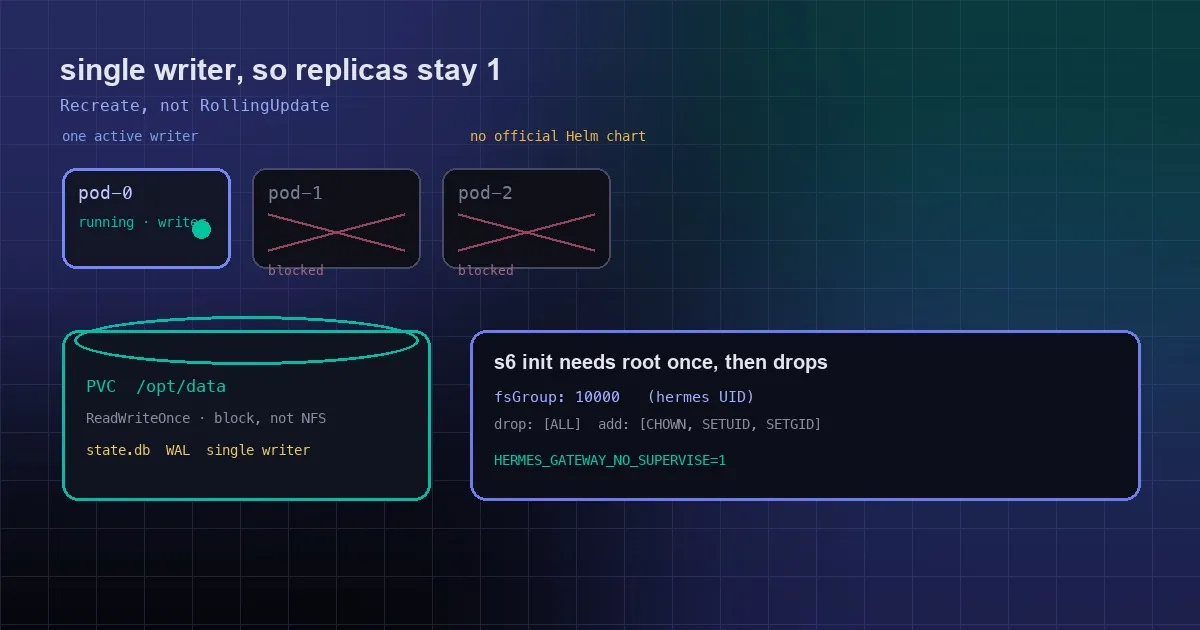
Running Hermes Agent on Kubernetes: no official Helm chart, one replica, and a container that starts as root
Three things in the official image fight standard Kubernetes defaults: state is single-writer, s6-overlay needs root at init, and there is no HTTP reload endpoint. Here is what actually breaks, and what to write in your manifest instead.
Read more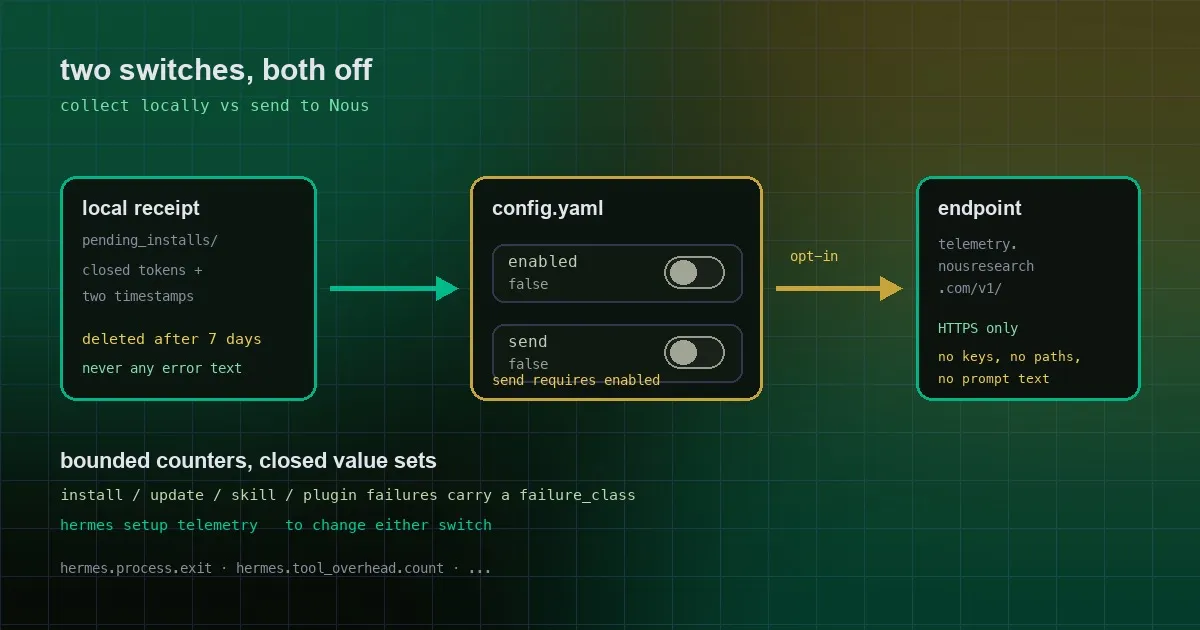
What Hermes telemetry actually records: two switches, both off by default, and nothing that looks like your content
Under telemetry.shared_metrics there are two independent opt-ins — enabled collects locally, send transmits to Nous — and both default to false. Here is what the bounded counters contain, plus the new failure-reason classes.
Read more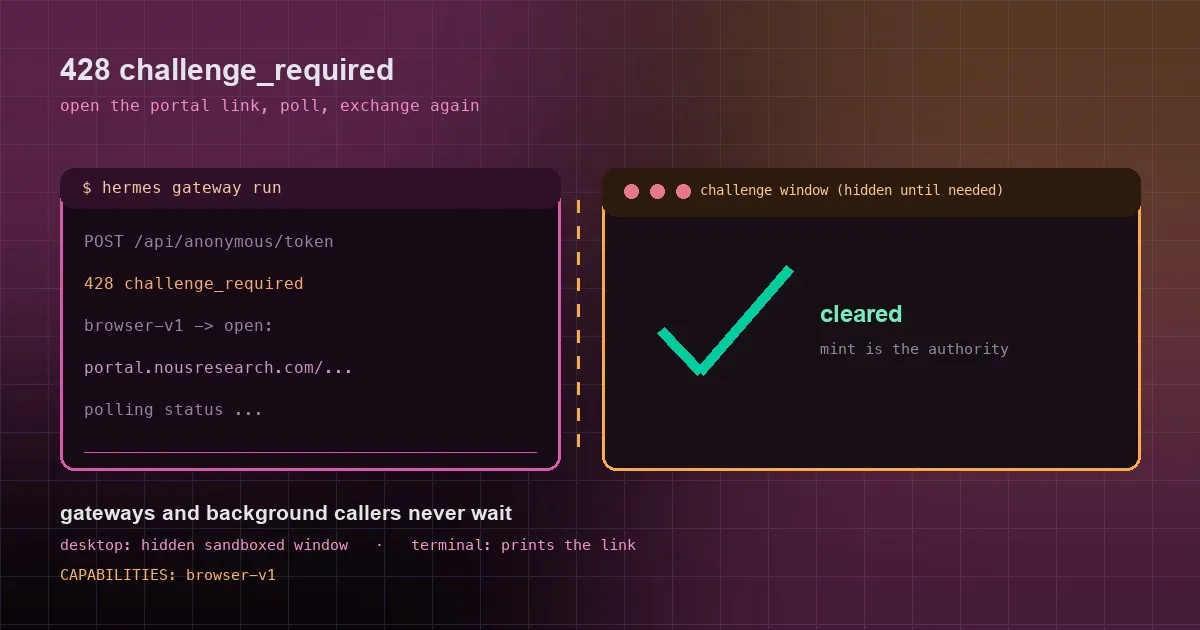
Hermes just asked you to clear a browser check? Here is what the 428 challenge on the free tier is
When the Nous account service decides an IP range needs a browser check first, the anonymous token exchange answers 428 challenge_required. Hermes implements one primitive: open the portal link, poll the status, exchange again — while background callers never block.
Read more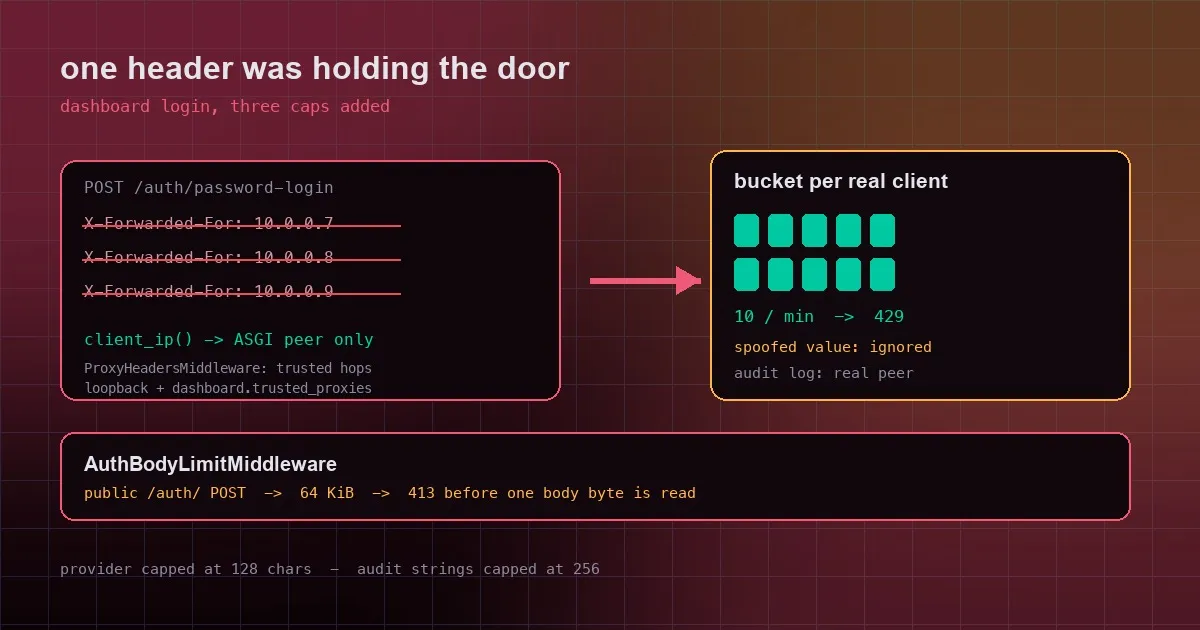
Your dashboard login limit was spoofable with one header
Three auth hardening fixes merged the same day: a forged X-Forwarded-For reset the dashboard login rate limit, an unbounded audit field could fill your disk, and the public auth routes had no request-body size limit.
Read more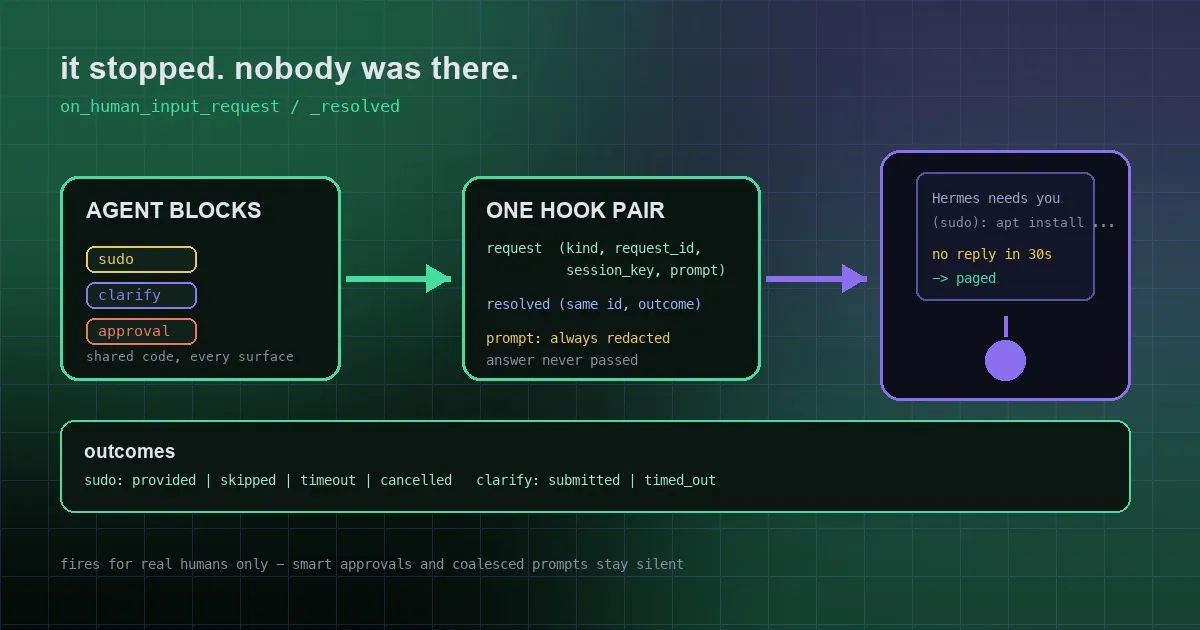
When Hermes is stuck waiting on a human, your plugin can now tell
A new on_human_input_request / on_human_input_resolved hook pair covers sudo prompts, clarify questions and dangerous-command approvals, so a notifier no longer needs one hook per prompt type.
Read more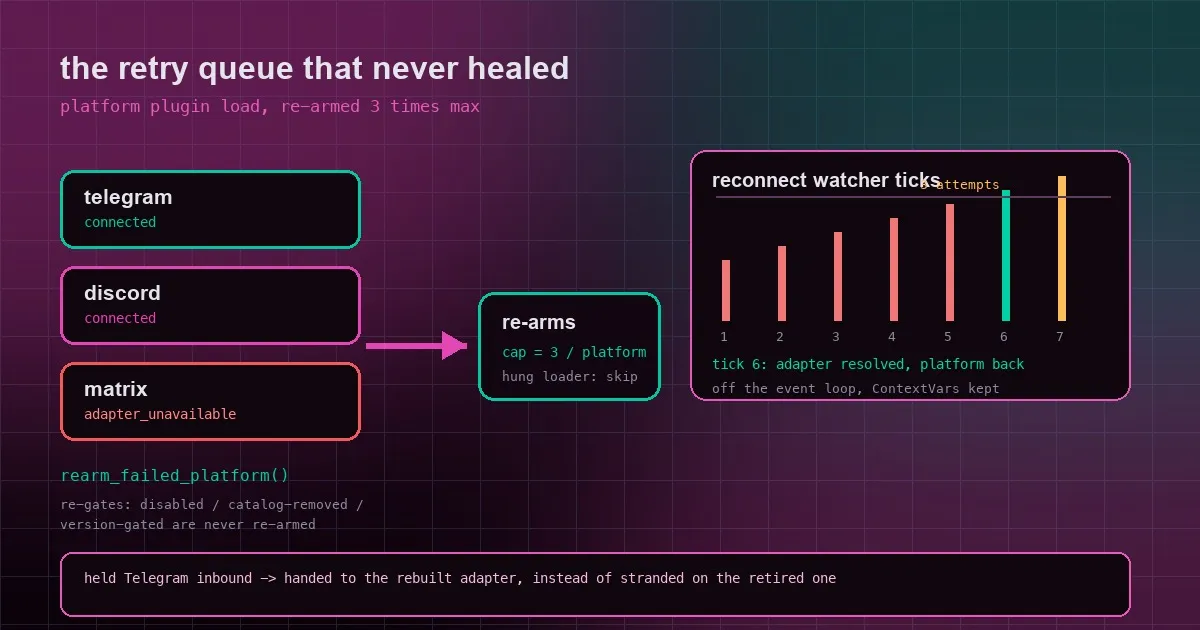
The gateway heals every platform but one — here is why
Three gateway reliability fixes: a platform whose plugin failed to load now retries its import, Telegram messages held during a disconnect are delivered after the adapter is rebuilt, and in-flight /v1 runs finish on gateway stop instead of being killed after 0s.
Read more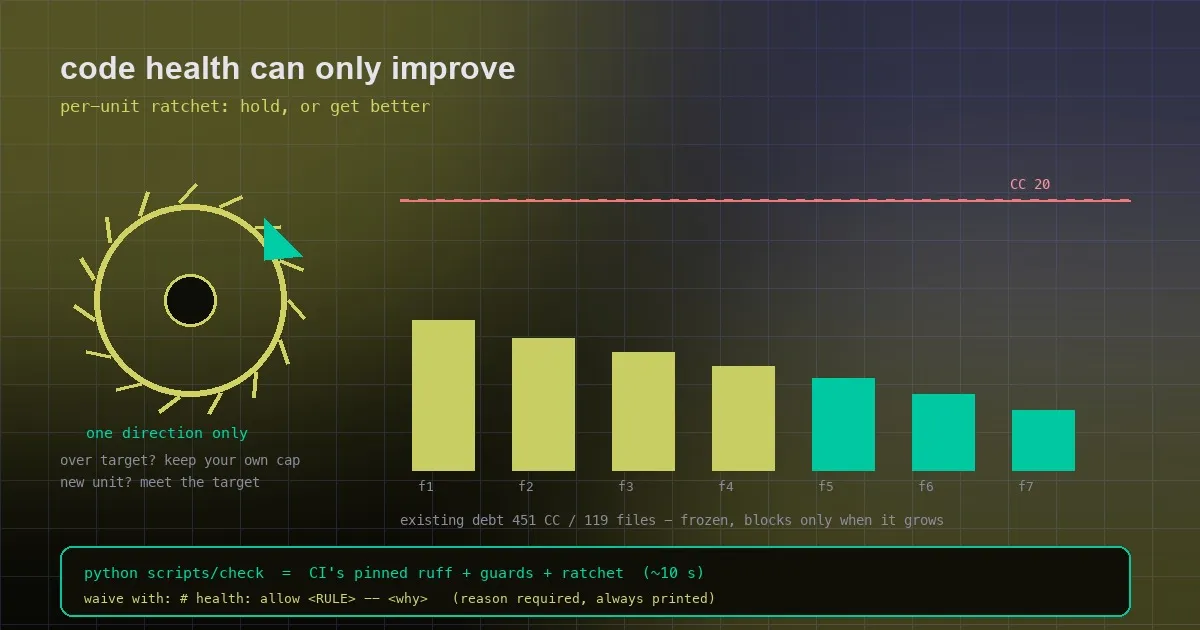
Agents write code faster than anyone can review it. Here is the ratchet that keeps the codebase from rotting
Hermes added a ratchet: every function and file may only stay the same or improve, new code has to meet the target, and one local command runs exactly what CI runs. Includes the CC/line/nesting thresholds, the escape hatch, and a 318-PR replay.
Read more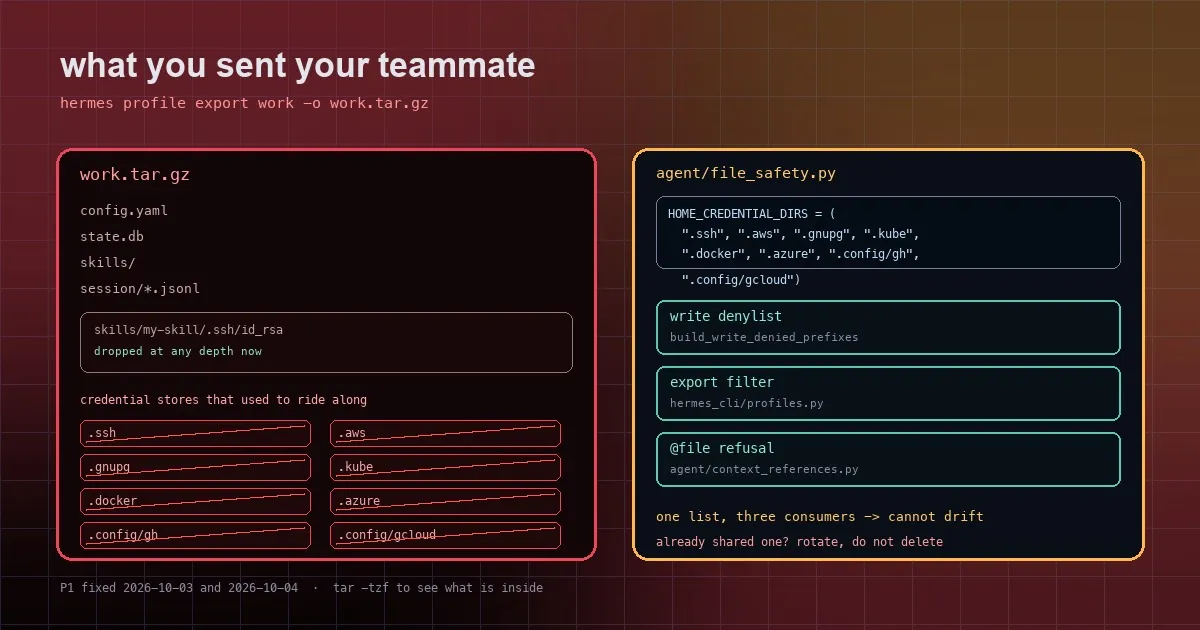
Your Profile Export Was Shipping Your Cloud Credentials
A tar.gz from hermes profile export is meant to let a teammate reproduce your setup — but it also carried .docker, .azure, .config/gh and .config/gcloud credential stores. Two PRs closed the gap.
Read more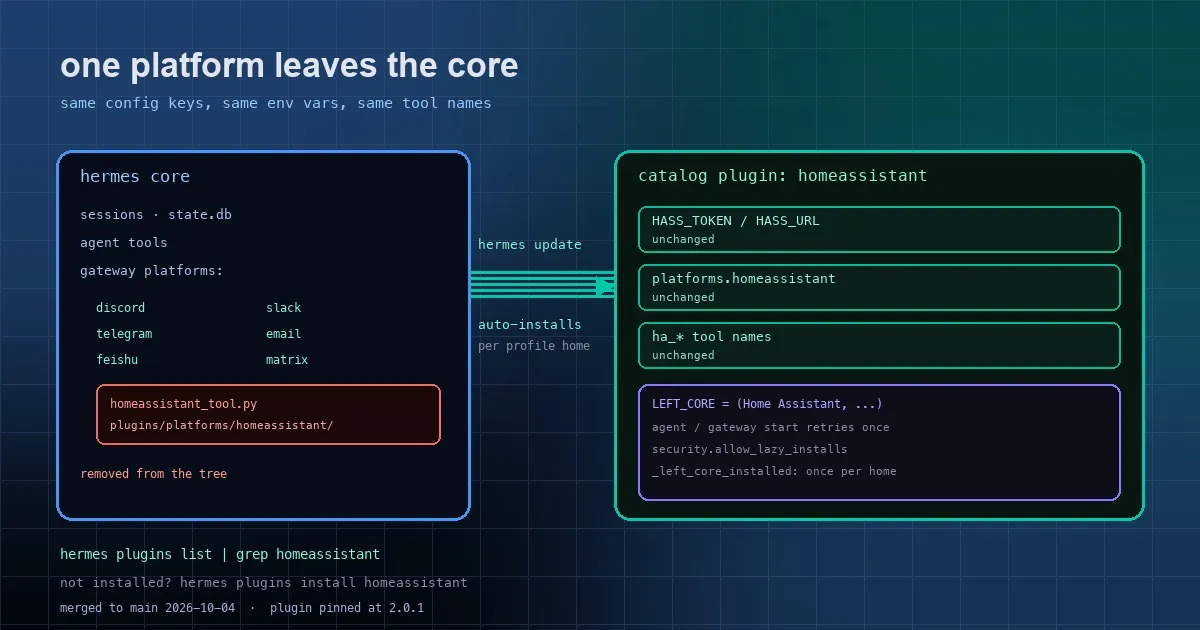
Home Assistant Left the Core: What Happens to Your Setup
The Home Assistant gateway platform and its tools moved out of Hermes core into an official catalog plugin — with an automatic migration that installs it per profile, leaving config keys, env vars and tool names untouched.
Read more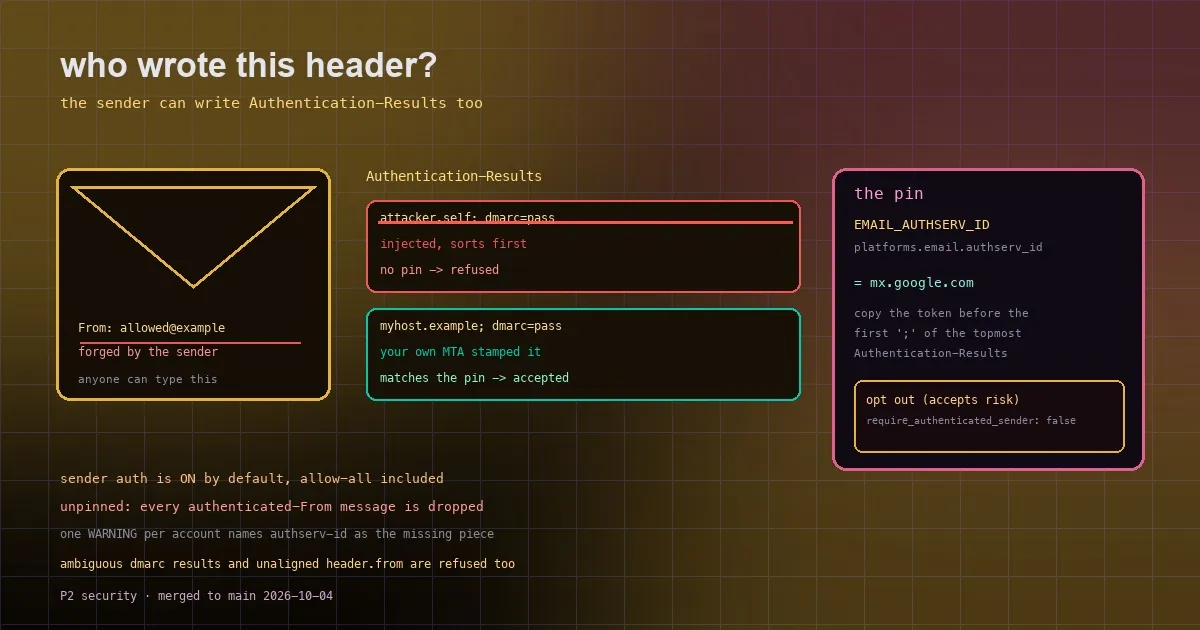
Hermes Stopped Believing the Sender's Own dmarc=pass
An Authentication-Results header is text the sender can write. Hermes now requires an authserv-id pin and drops mail until one is set — a deliberate behaviour change with a one-line fix.
Read more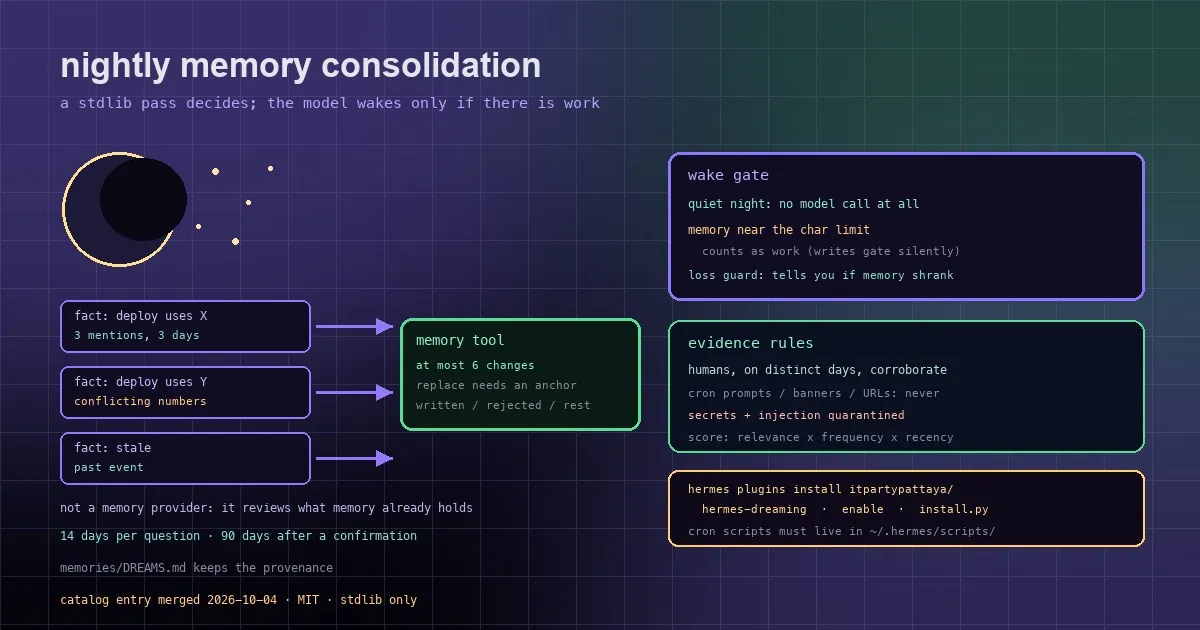
Memory Has a Budget: Why It Eventually Stops Remembering
Hermes' long-term memory has a character limit, and when it fills up writes are skipped silently. The hermes-dreaming plugin adds a deterministic nightly pass that records what matters and retires what does not.
Read more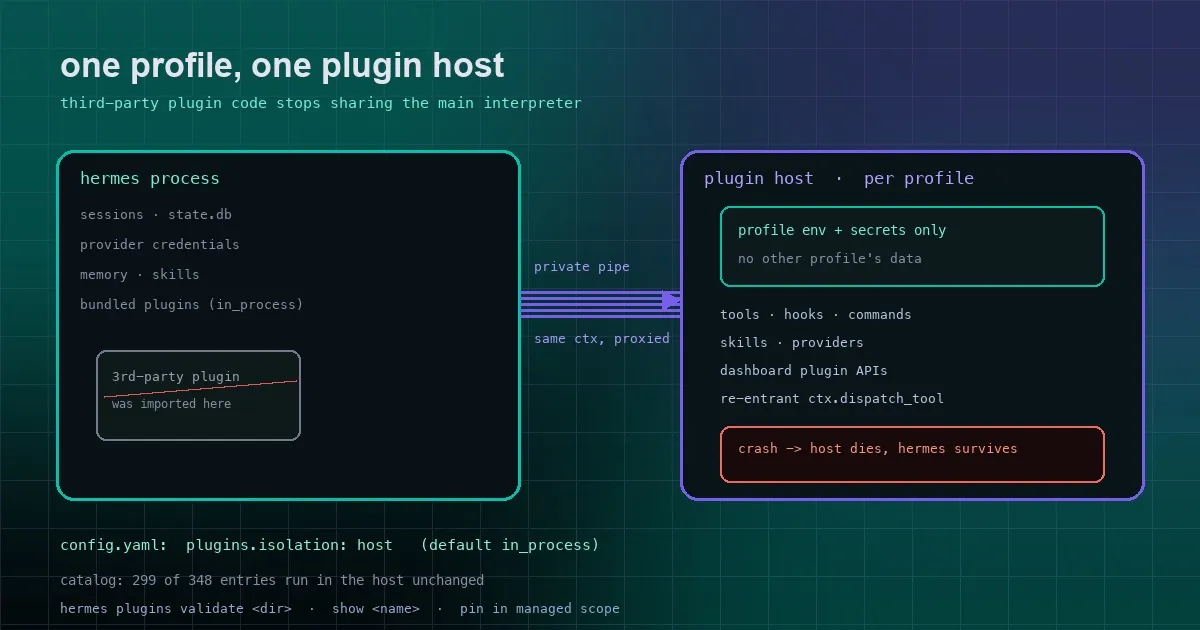
Third-Party Plugins Move Out of the Main Process: Inside plugins.isolation: host
A plugin you install used to share one Python process with every session, secret and in-memory key you own. The new plugins.isolation: host gives each profile its own plugin host process — no plugin code changes, and a short, documented list of what cannot move.
Read more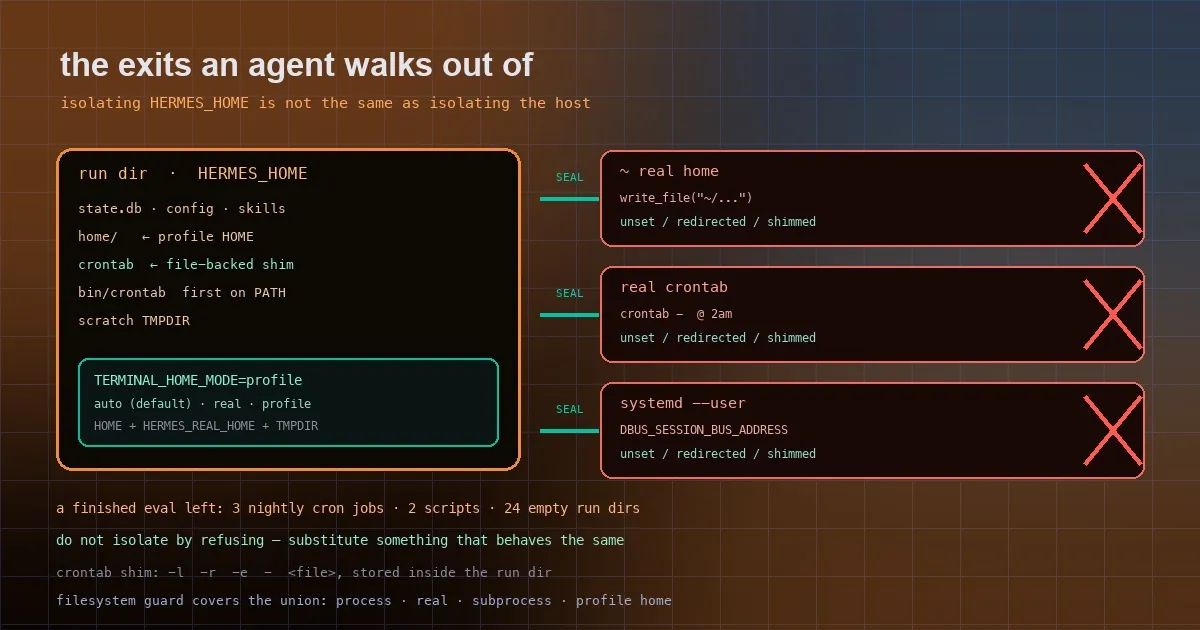
Your Agent Wrote to Your Real crontab at 2am: Sandboxing HOME and cron
A sandbox that isolates HERMES_HOME still leaves the agent writing to the real home directory, the real crontab and the real systemd user bus. Three ghost cron jobs left behind by one eval run show which exits an isolation story has to cover.
Read more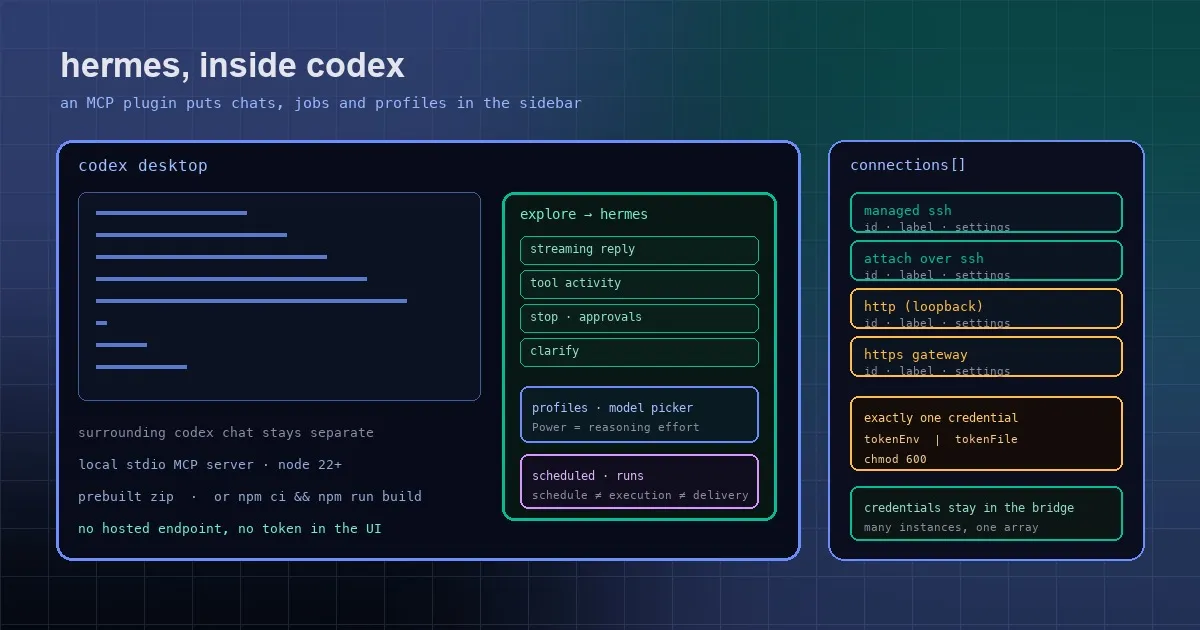
Running Hermes Inside Codex: A Community MCP Extension
Editing code in Codex while Hermes runs your automations usually means two windows and a lost train of thought. This community MCP extension embeds Hermes chats, profiles, model switching and the scheduler into Codex, with credentials kept in the local bridge process.
Read more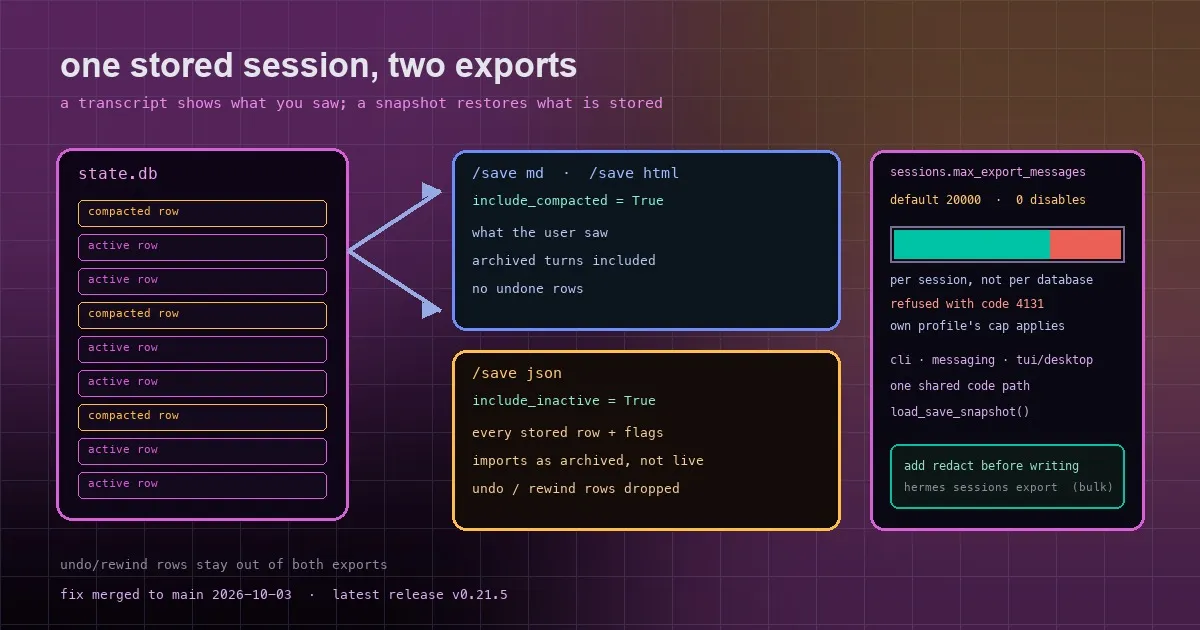
Why Your /save Export Was Missing Turns — and the Cap Behind It
The same session could export completely from the CLI and come up short in the desktop app, losing turns that in-place compaction had archived; a very large session could exhaust memory instead. The fix unifies all three surfaces on one code path and applies each profile's own export cap.
Read more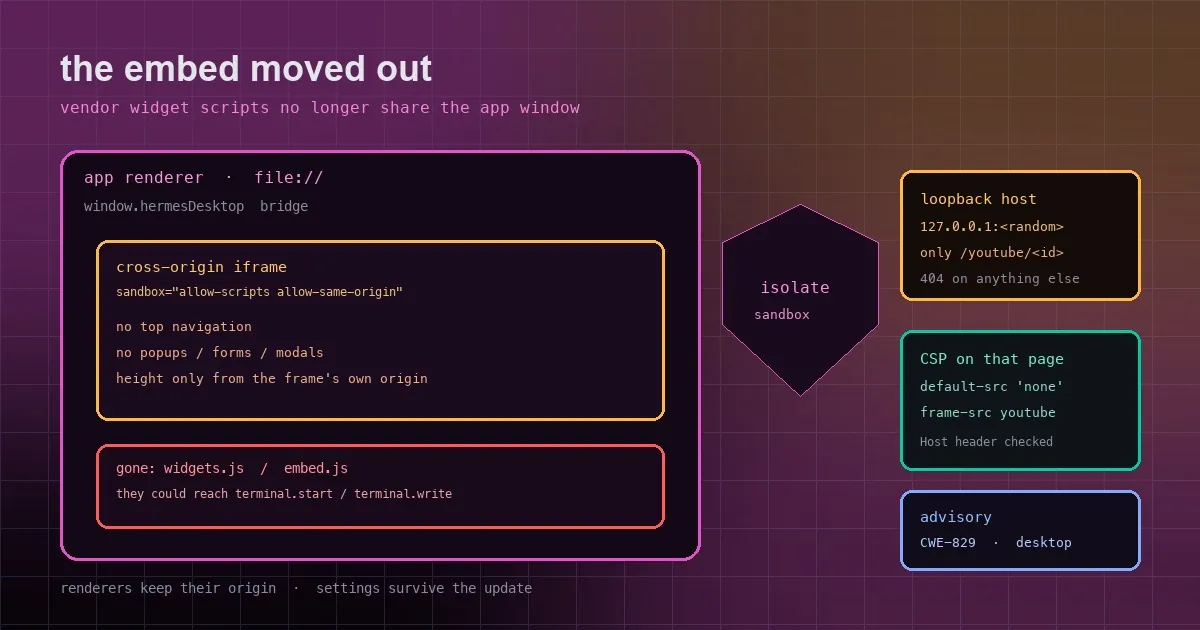
Why Third-Party Embeds in the Desktop App Have to Be Sandboxed
How Hermes isolates X, Instagram and YouTube embeds in the desktop app, one already-public security issue and its fix, and the version status today.
Read more