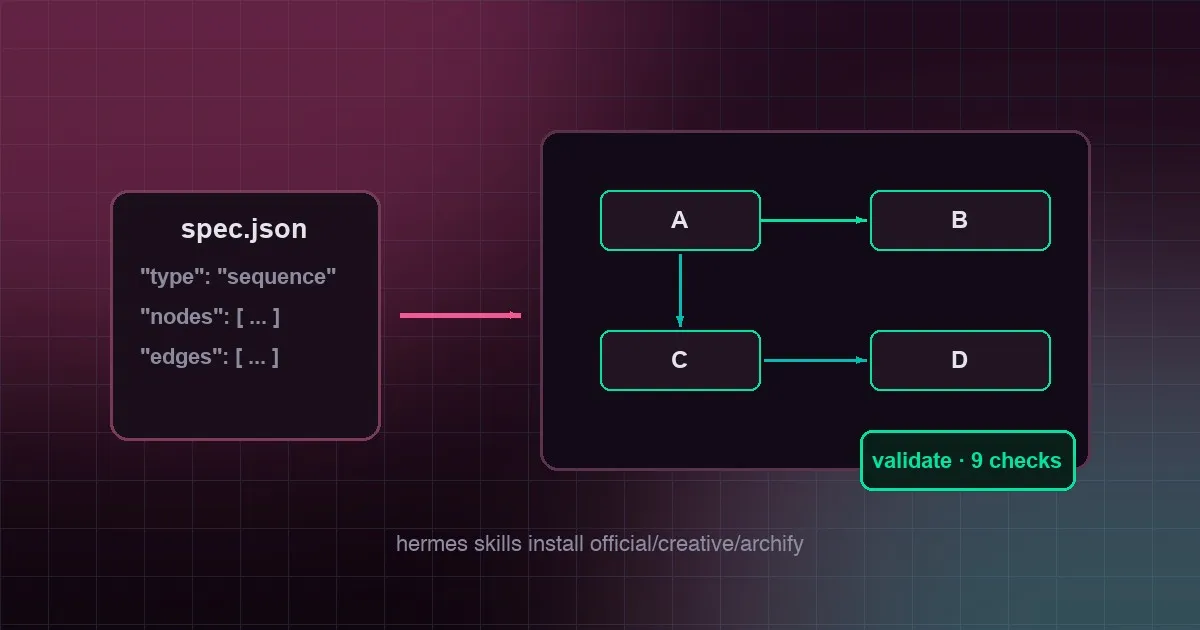
Stop Drawing Architecture Diagrams by Hand: The Archify Skill Validates Before It Delivers
The real problem with a hand-drawn architecture diagram is not drawing it — it is that it starts going stale the moment it is done. Archify is an optional Hermes skill that turns a small typed JSON spec (or pasted Mermaid) into a self-contained interactive HTML diagram — architecture, workflow, sequence, dataflow and lifecycle — and runs a nine-check validation before handing it over, so correctness comes with a receipt. Here is how to install it, how to use the five types, and how it splits work with the built-in diagramming skill.
Read more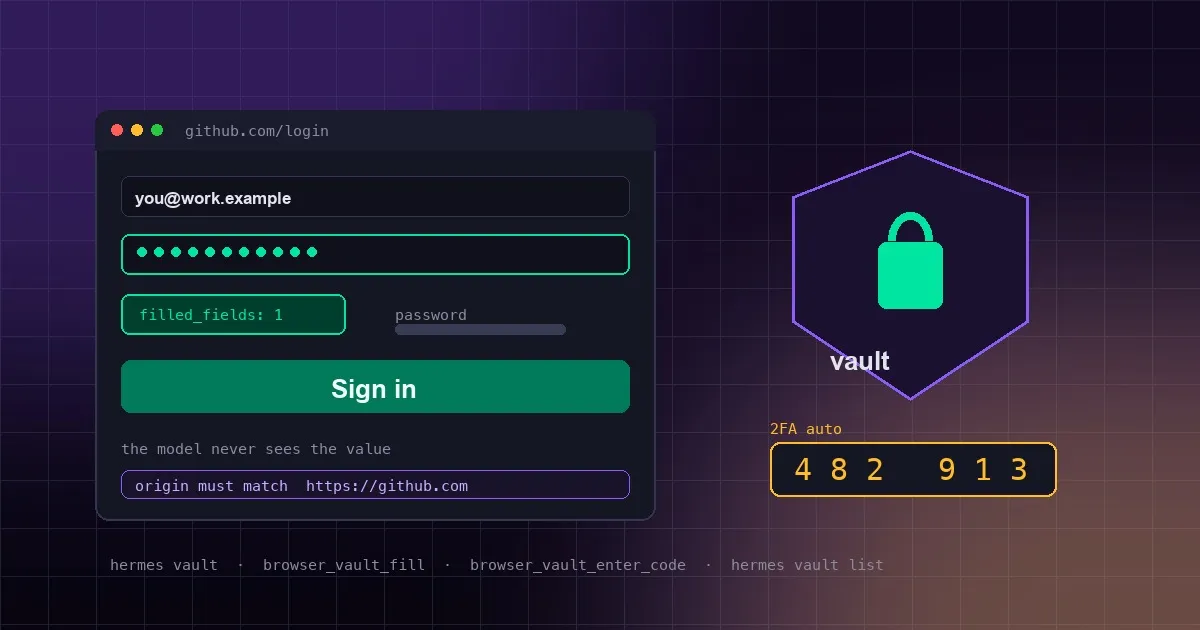
Hermes Can Now Use Your Password Manager: Sign-Ins, Cards, and 2FA Without Handing Over the Password
Handing an agent your password to log in has always felt wrong — you paste it into the chat and it lives in the transcript forever. Hermes' new credential vault fixes the plumbing: the first time it hits a sign-in page it asks you right there in a masked prompt, stores the secret encrypted on your machine, and injects it only into the origin it was saved for. Authenticator keys make 2FA automatic, every card fill needs your approval, and headless sessions are refused outright.
Read more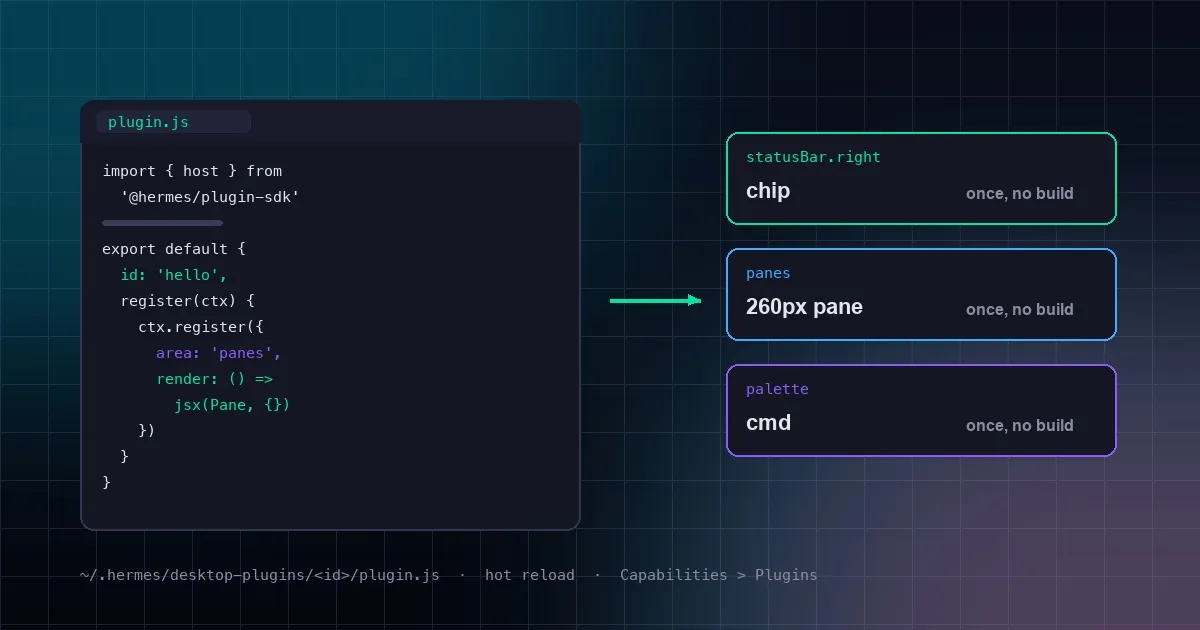
One File, One Panel: A Practical Guide to the Hermes Desktop Plugin SDK
Every surface in the Hermes Desktop window — layout panes, sidebar nav, status bar, ⌘K palette, keybinds, themes — registers into the same registry, and the core app registers its own chrome exactly the way a plugin does. That means you can extend it: one ESM file, one import from @hermes/plugin-sdk, dropped into ~/.hermes/desktop-plugins/<id>/plugin.js. It loads in seconds, hot-reloads on every save, and needs no repo clone and no build step.
Read more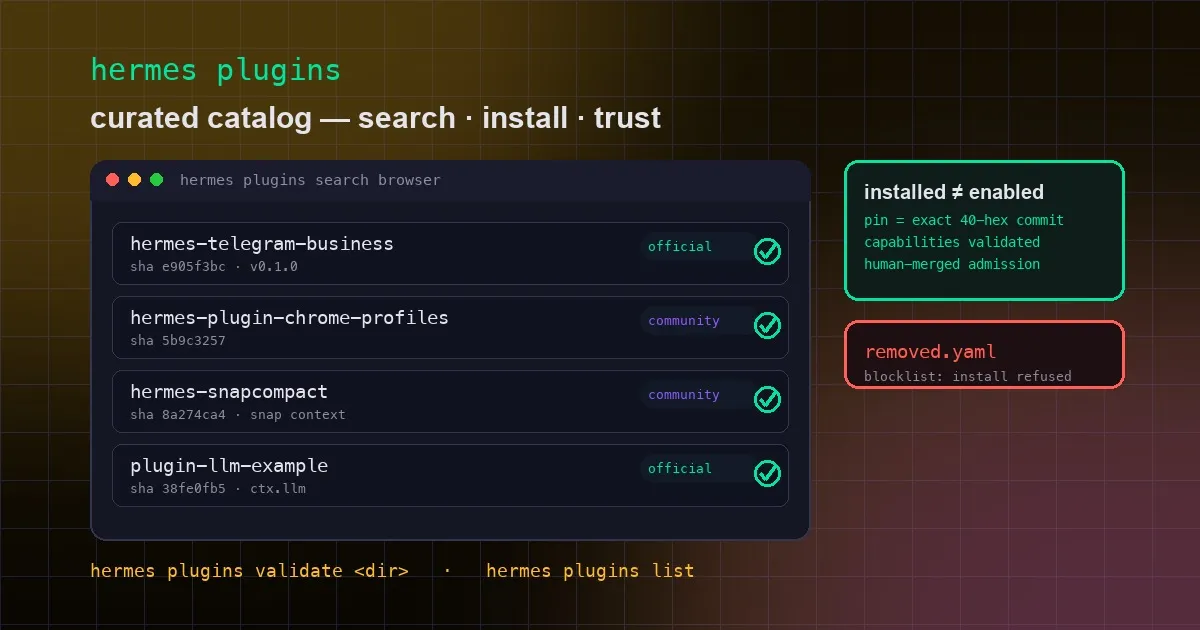
The Hermes Plugin Catalog Is Here: Stop Guessing Which Plugin Is Safe
Install, trust, and discover Hermes plugins the official way: a human-reviewed plugin catalog lands on September 9, pinning every entry to an exact commit SHA, tagging it official or community, and forcing declared capabilities to match what the plugin actually registers. Removed plugins go on a removed.yaml blocklist that refuses installs everywhere. From `hermes plugins search` to `hermes plugins install`, discovery and trust now live in one command.
Read more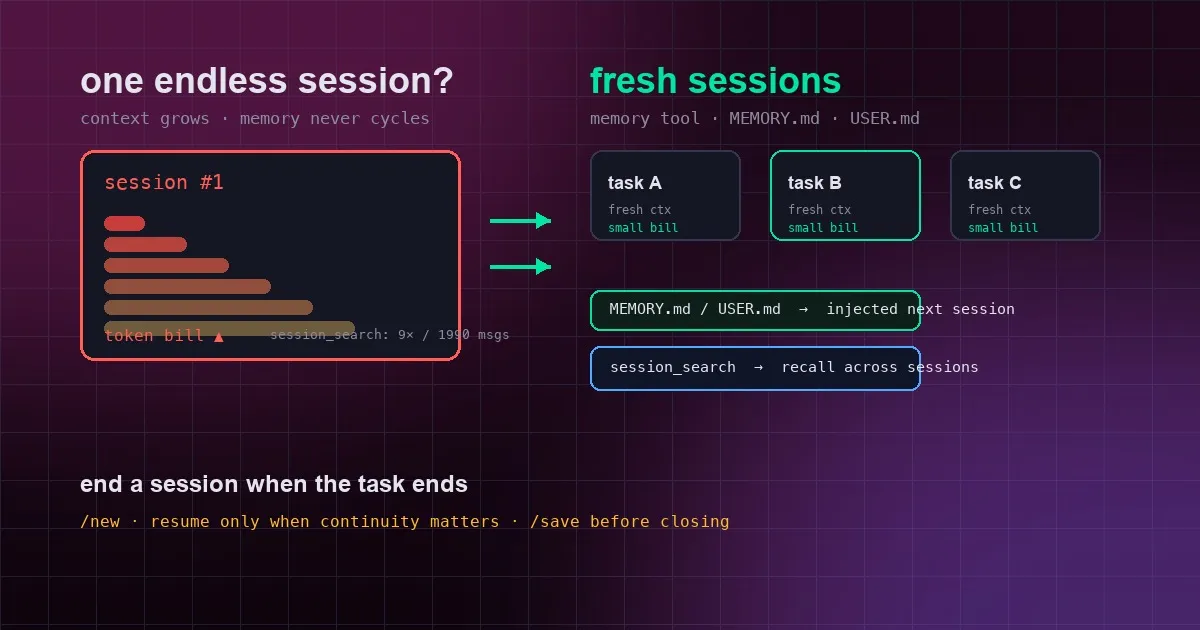
Don't Let One Session Run Forever: Why Hermes Long-Term Memory Needs Session Boundaries
One developer ran Hermes for 18 days inside just 5 sessions and watched session_search fire only 9 times across 1,990 messages while memory files went stale — because he never ended a session. Hermes memory is designed around session boundaries: MEMORY.md/USER.md inject at session start, background review settles takeaways at turn end, and session_search recalls across sessions — all of it presupposes you actually close sessions. Here is how the memory system works and when to start fresh versus resume.
Read more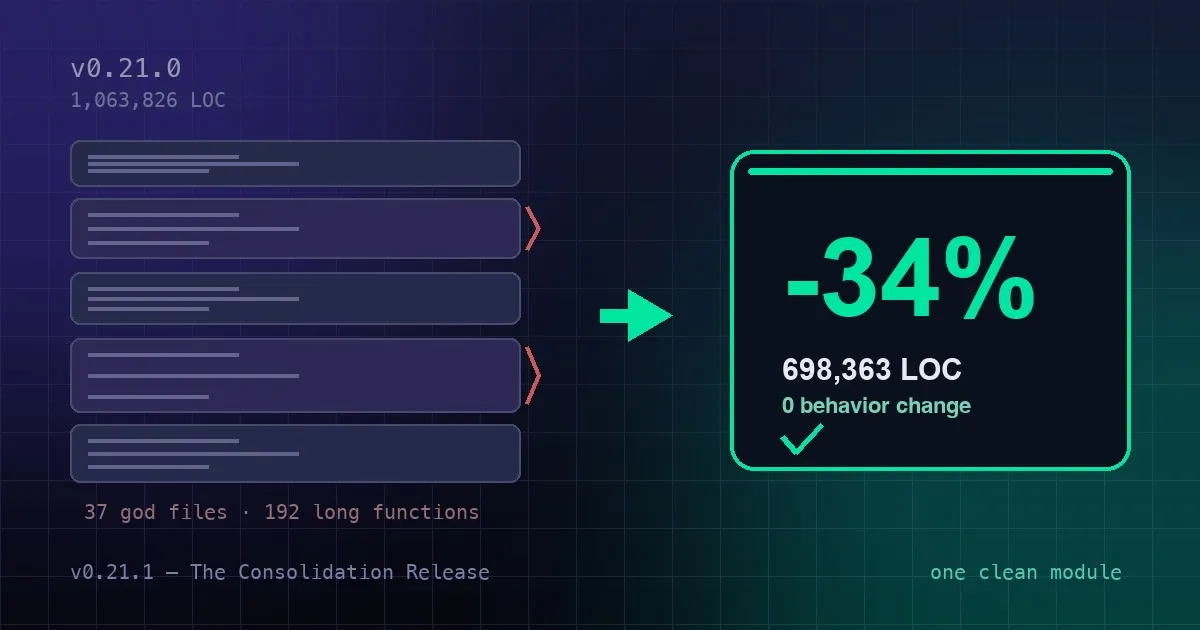
Hermes v0.21.1: The Update That Made Hermes a Third Smaller — and Everything You Care About Faster
v0.21.1 (The Consolidation Release) restructures the codebase and cuts ~34% of its source LOC with zero behavior change, makes delegate_task report each subagent result as it lands instead of waiting for the slowest child, lets children hand running background processes back to you, adds device-code login for MCP servers on headless hosts, makes OpenRouter provider pins per-model with 20-minute catalog refreshes, and speeds up local search_files 5-6x with native ripgrep.
Read more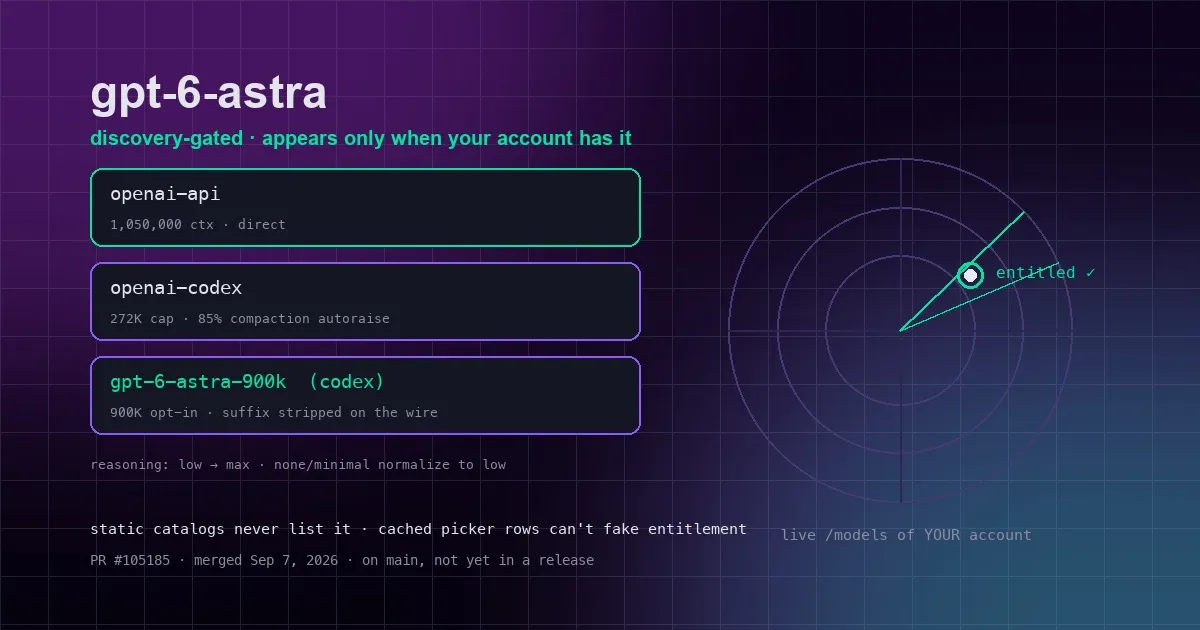
How to Run GPT-6 Astra in Hermes — and Why It Is Missing From Your /model List
OpenAI's GPT-6 Astra, the first GPT-6 flagship, landed in early September with a 1.05M context window and five reasoning-effort tiers. Hermes integrates it through discovery gating: the model only appears in /model when your own account has access. This guide covers the gating mechanism, the 272K vs 900K vs 1.05M windows, the 85% compaction autoraise, and the exact commands to switch.
Read more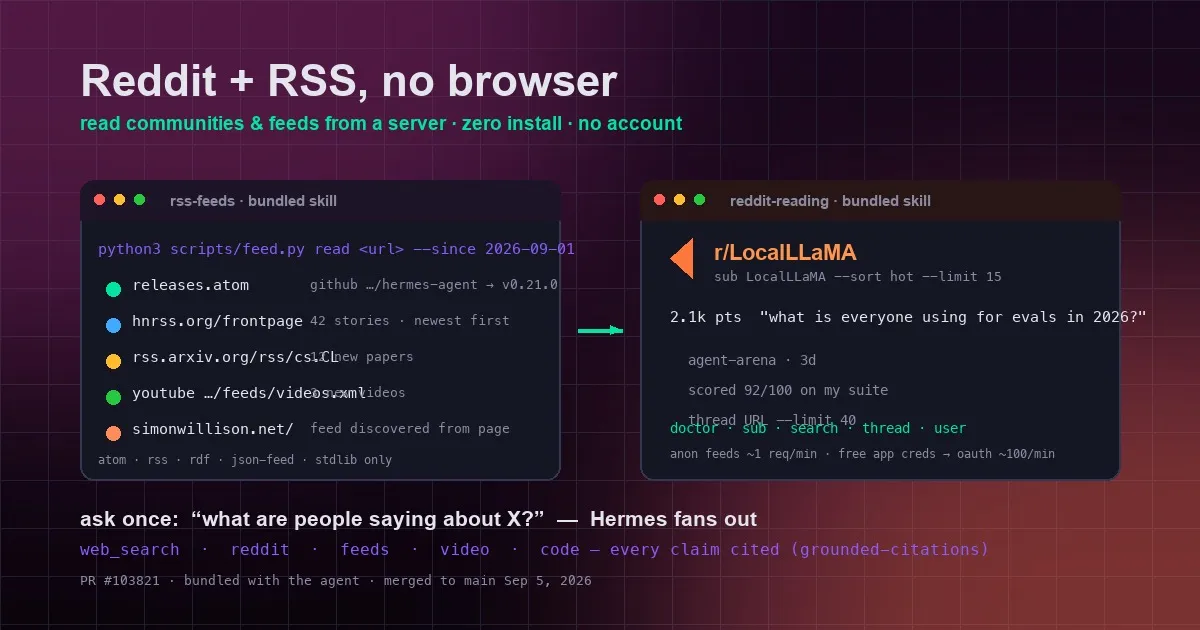
Reddit and RSS Without a Browser: Hermes Reads Communities and Feeds From Any Server
Two new bundled skills landed on Hermes main on September 5, 2026: rss-feeds turns RSS/Atom/JSON feeds into a clean list (with feed auto-discovery), and reddit-reading reads subreddits, search, threads, and users with no browser and no login — anonymous by default, or ~100 req/min via a free app-only OAuth upgrade.
Read more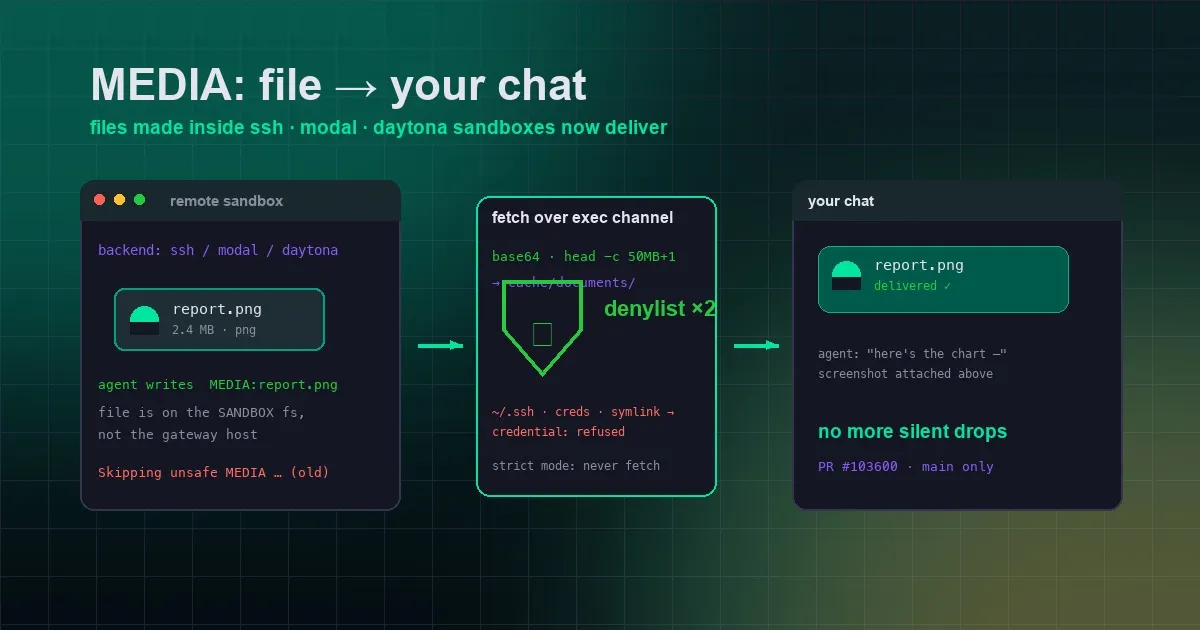
Hermes Now Hands You the Files Its Agent Creates Inside Remote Sandboxes
When Hermes runs its hands inside a remote sandbox (SSH, Modal, Daytona, Singularity, Vercel), files the agent creates there — screenshots, charts, reports — used to vanish with a 'Skipping unsafe MEDIA directive path' log line. Since 2026-09-05 the gateway pulls sandbox files back over the exec channel and delivers them normally: 50MB cap, the host denylist applied twice, symlinks to credentials refused. This post explains the MEDIA: tag mechanism, the fix, and its security boundaries.
Read more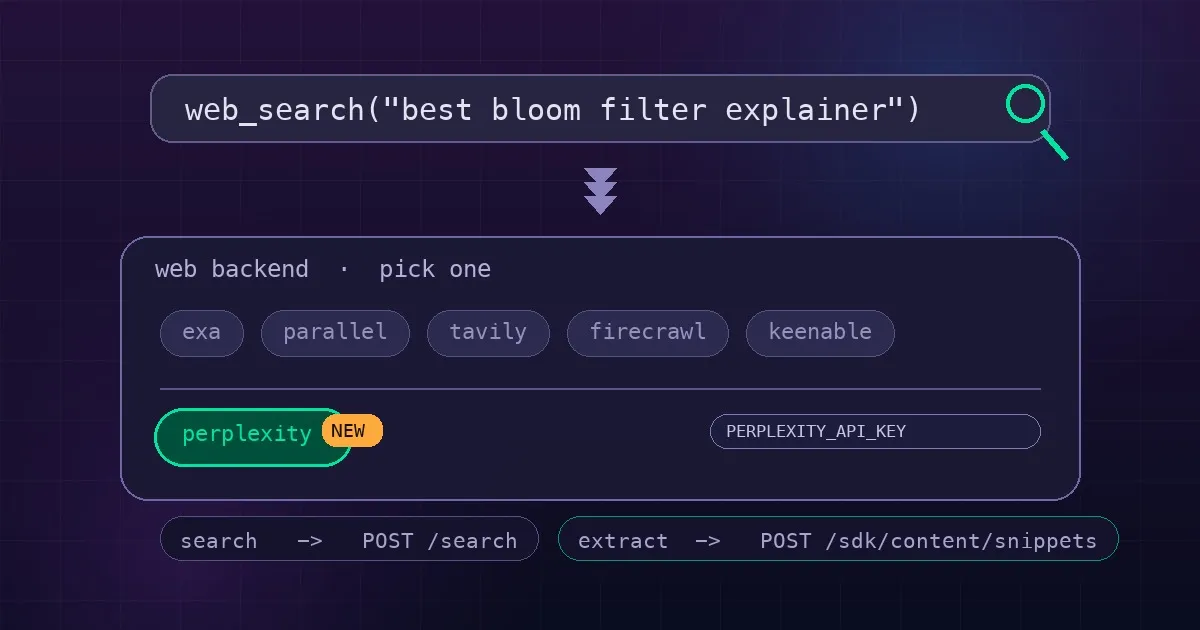
Hermes Meets Perplexity Search: One API Key Upgrades Both Web Search and Page Extraction
Perplexity Search API is now an official backend for Hermes web_search and web_extract (merged to main September 4, 2026). How to configure the key, switch backends, and why its extract returns query-relevant snippets, not full pages.
Read more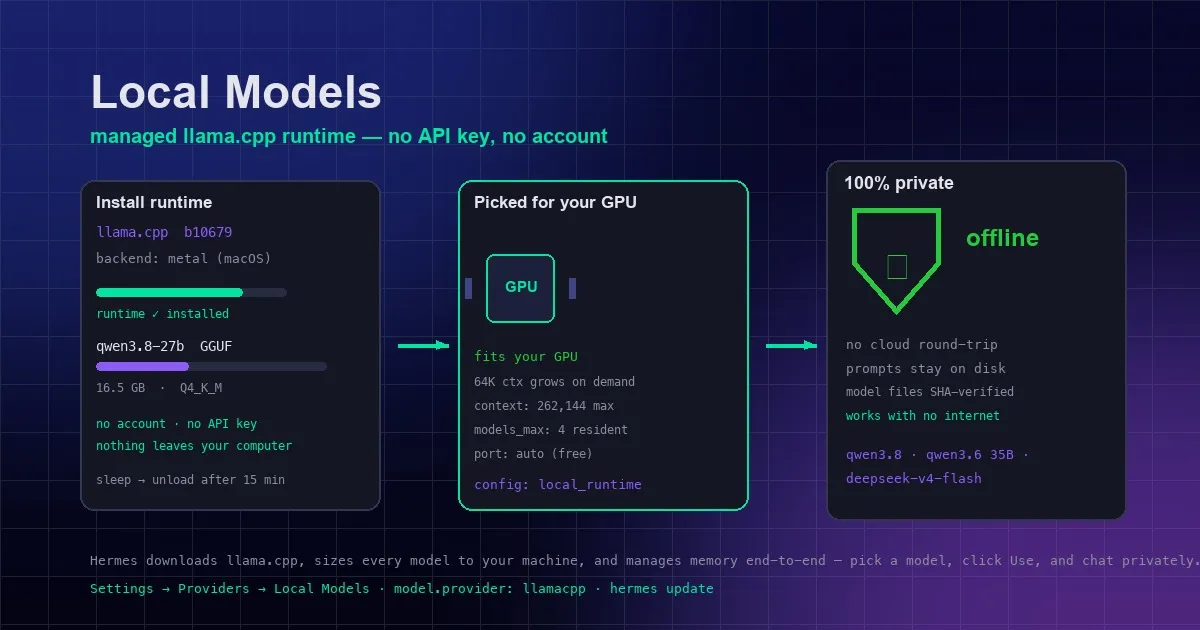
Run Hermes on Local Models: No API Key, No Account, Works Offline
Hermes can now run open models entirely on your own machine — it downloads and manages the llama.cpp inference engine, picks the right quantized build for your GPU, and handles VRAM end-to-end. No account, no API key, and no network access after a model is downloaded. A step-by-step guide to the new Local Models runtime, the model catalog, the memory management logic, and the config keys.
Read more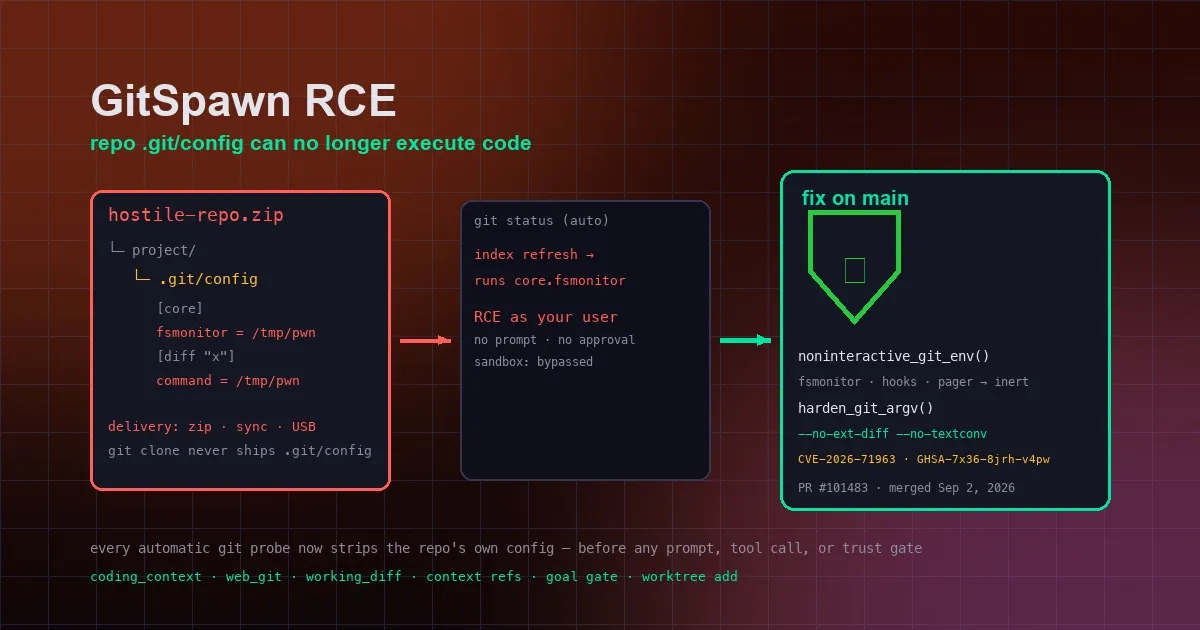
The Repo Ran Code Before You Typed a Word: GitSpawn and How Hermes Fixed It
A teammate zips up a project, you unzip it, drop the folder into Hermes, and before you type a single instruction — attacker code has already run as you, on your machine. That is GitSpawn, a vulnerability class disclosed by Manifold Security on September 1 that spans Claude Code, Codex, Cursor, Goose, Qwen Code, Grok Build, and Hermes Agent. Coding agents run git automatically to gather context before any prompt or trust gate, and a repo's own .git/config can point git at an arbitrary program (core.fsmonitor, hooksPath, and diff drivers are all execution sinks). Hermes merged its fix on September 2 (PR #101483, on main): every automatic git probe now runs in a sanitized environment, and diff rendering forces --no-ext-diff --no-textconv. This post explains the attack, how it spreads, and how to check your own setup.
Read more
Hermes v0.21.0: Bot Mode Built In, Agents That Message Each Other, and Cron Jobs That Remember
v0.21.0 (The Pantheon Release) ships Bot Mode built into the desktop app with group chats and named agent avatars, adds the hermes peer command for bot-to-bot DMs across profiles and gateways, gives cron jobs persistent memory and continuity, lets you steer subagents live, turns the MCP surface into a command center, and hardens security across instruction files, redaction, and Windows approvals.
Read more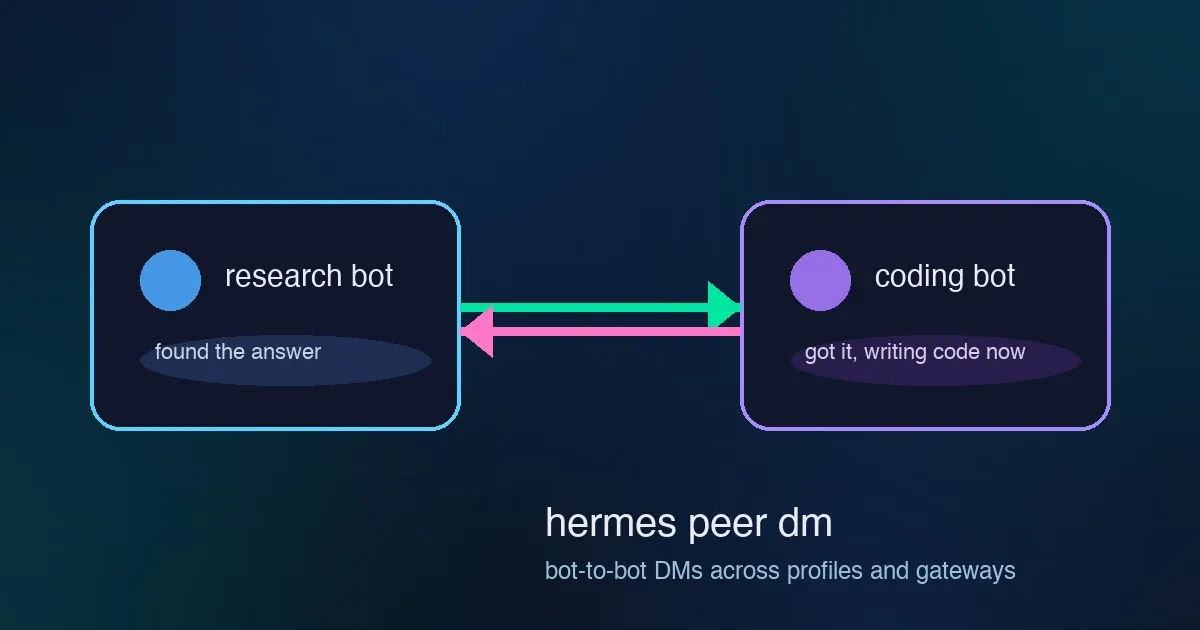
hermes peer: Let Your Agents DM Each Other Across Profiles and Machines
Your research agent found the answer — now you copy-paste it into your coding agent's window by hand. hermes peer (shipped in v0.21.0) lets any Hermes agent message any other agent by handle, across profiles and gateways: register a peer gateway, then hermes peer dm spark "disk status?" delivers into the remote agent's canonical Bot Chat and prints the reply. Long tasks run asynchronously with hermes peer run + idempotency keys, and exit codes stay script-friendly.
Read more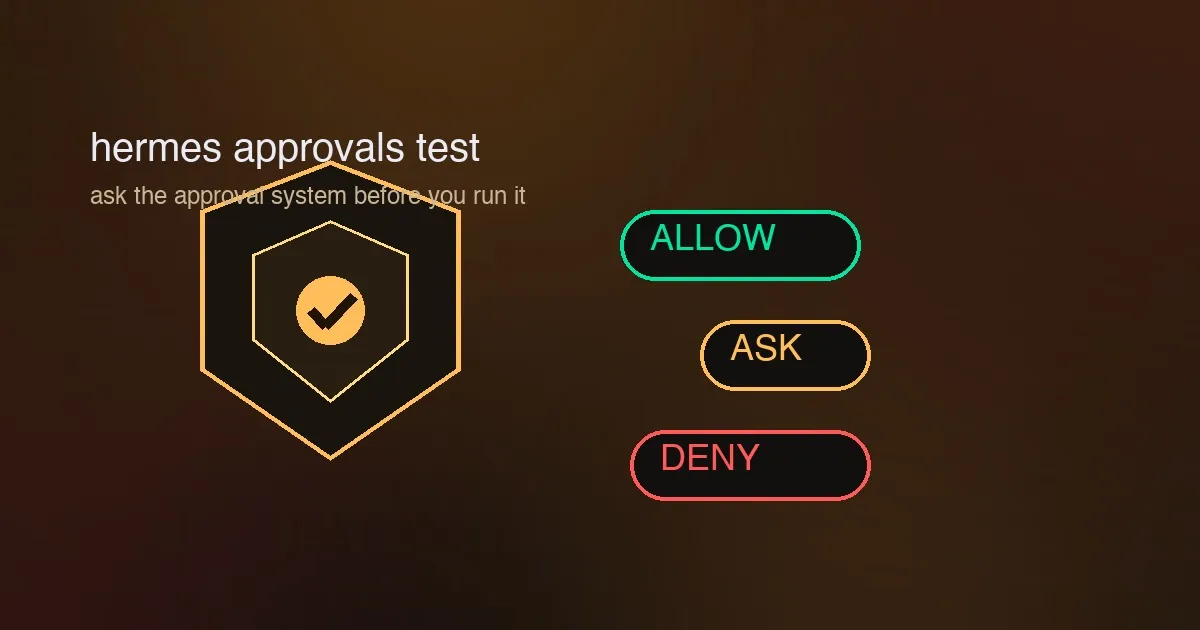
hermes approvals test: Ask the Approval System Before You Run That Command
Ever wondered whether a command will trip Hermes' approval gate — without actually running it? hermes approvals test (v0.21.0) dry-runs any command against the real guards: hardline blocklist, your approvals.deny rules, dangerous-pattern detection, allowlist, and yolo/off bypass. It prints the verdict, the matching rule, and the normalized command trace, and exits 0 (allow), 2 (ask), or 3 (deny). Bonus: hermes approvals suggest mines your approval history into allowlist proposals.
Read more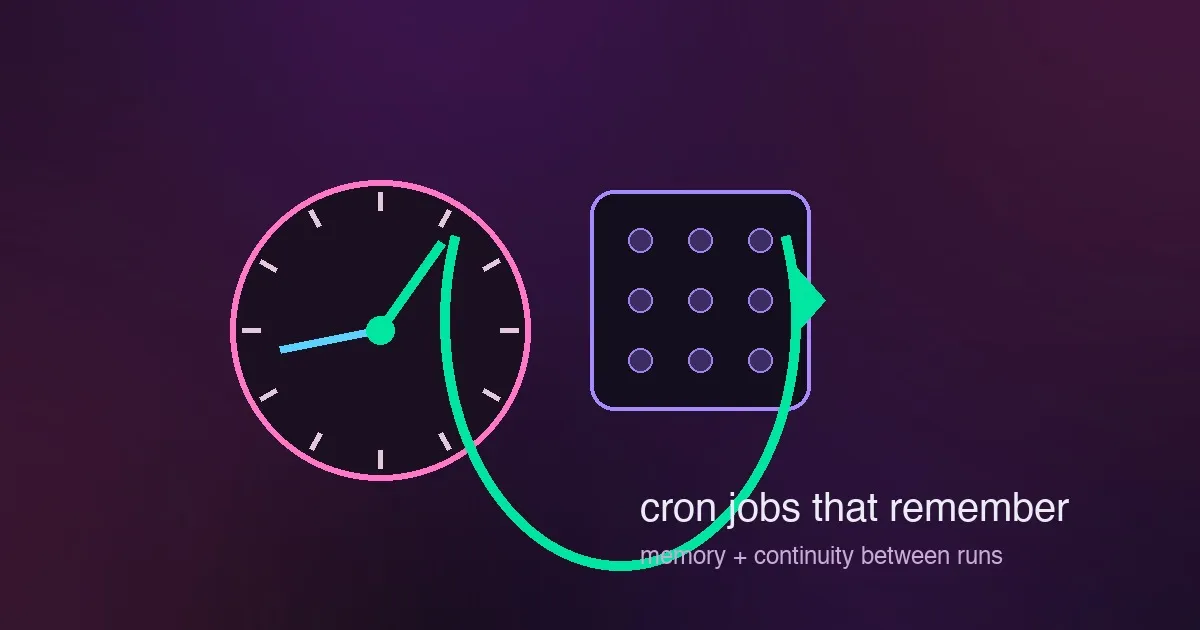
Cron Jobs That Remember: Memory and Continuity for Your Scheduled Agents
Your 9am briefing job has told you the same three items for a week, because every run starts from zero — scheduled jobs were goldfish. v0.21.0 changes that: cron agents now load and update persistent memory like any other agent, the --continuity flag injects the previous run's output into the next (so a monitor can dedupe and continue where it left off), every job gets a durable notepad via hermes cron notepad, and monitor-mode jobs skip the LLM entirely when nothing changed.
Read more